Scroll To Top
Scroll To Top

Jerusalem — Mount Zion Photo Gallery

Click the title to view map


Jerusalem Overview

Introduction

Zion Gate
Zion Gate

Rising just southwest of Jerusalem’s Old City, Mount Zion preserves some of the city’s most important Christian and Jewish traditions. Within a short walk are sites associated with the Last Supper, King David, the Apostle Peter, and the early Christian Church. Although many of the present buildings date to the Byzantine, Crusader, or later periods, the hill has been revered by pilgrims for centuries and continues to draw visitors from around the world. This gallery explores the principal monuments of Mount Zion, their history, and the events that have made this hill one of Jerusalem’s most significant places of pilgrimage.

Slide Presentation Major Events

Major Events at Jerusalem

Dormition Abbey

Seen from the Mount of Olives, the Dormition Abbey appears on the western hill beyond the Temple Mount. In the foreground are the southern end of the Temple Mount and the gray lead-covered roofs of the Al-Aqsa Mosque. The abbey’s large dome and bell tower rise prominently in the upper right of the photograph.

This distant view helps orient visitors to Jerusalem’s geography. The Temple Mount occupies the eastern ridge of the city, while Mount Zion rises just to its southwest, allowing landmarks such as the Dormition Abbey to be recognized from many viewpoints across Jerusalem.

Dormition Abbey

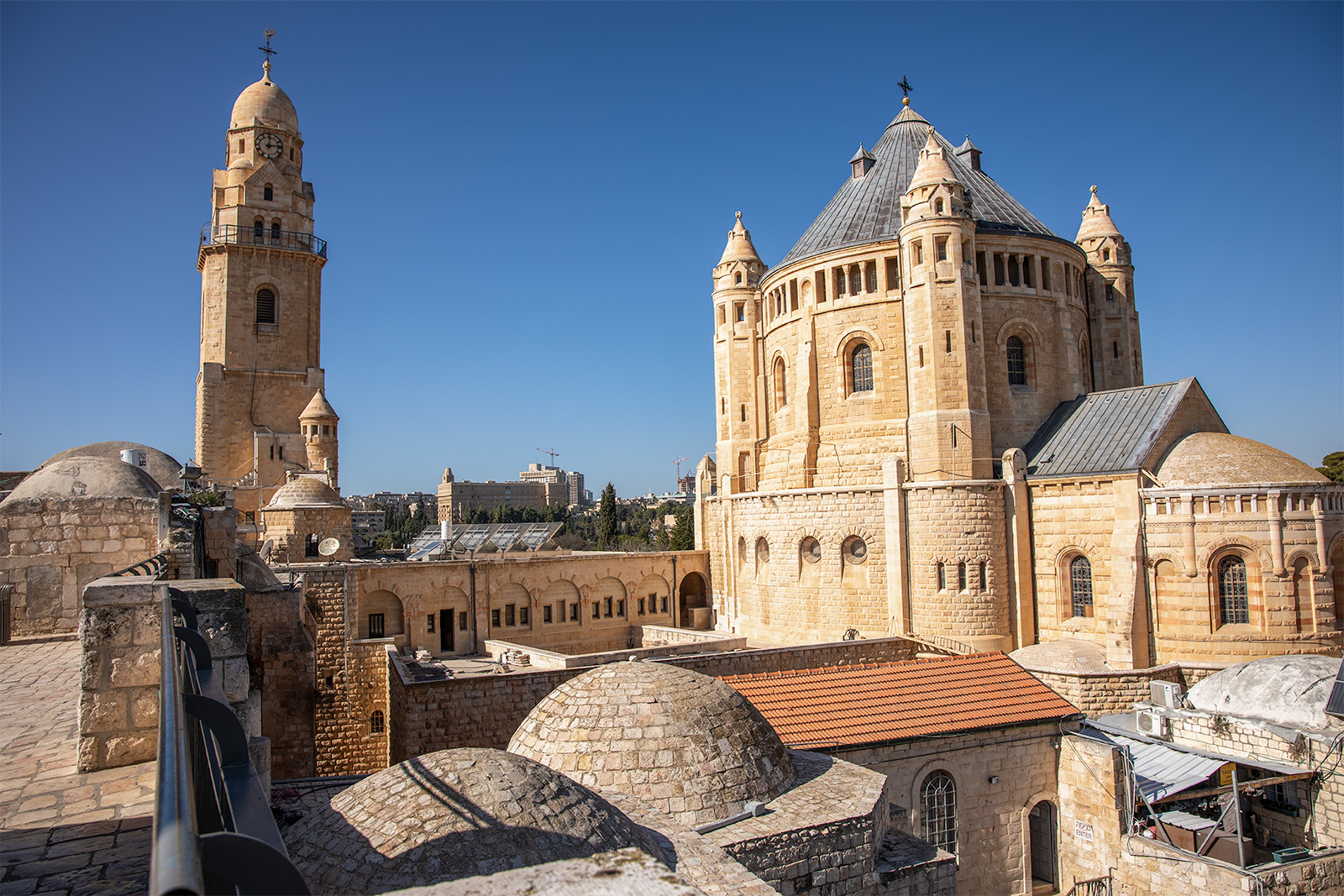
The Dormition Abbey stands just inside Mount Zion, immediately south of the Old City’s Zion Gate. Completed in 1910 by German Benedictine monks, the church commemorates the Christian tradition that the Virgin Mary "fell asleep" (Latin: Dormitio) before being taken into heaven. Its distinctive circular sanctuary and tall bell tower have made it one of Jerusalem’s most recognizable landmarks.

Rising between the abbey and the bell tower in the distance is the King David Hotel, one of Jerusalem’s most famous buildings. Since opening in 1931, it has hosted kings, presidents, diplomats, and other world leaders, making it both a luxury hotel and an important landmark in modern Jerusalem.

Dormition Abbey

This view was taken from the Old City walls above Zion Gate, looking southwest toward Mount Zion. From this vantage point, the abbey’s massive circular church and bell tower dominate the skyline just beyond the city walls.

The elevated perspective also illustrates how closely Mount Zion lies to the Old City. Visitors who enter through Zion Gate can reach the Dormition Abbey, the traditional Upper Room, and David’s Tomb within only a few minutes’ walk.

Upper Room

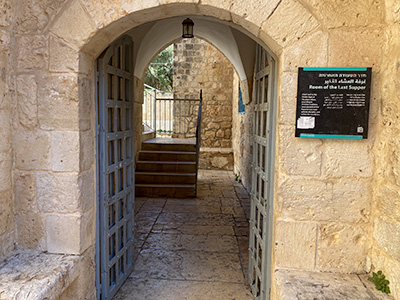
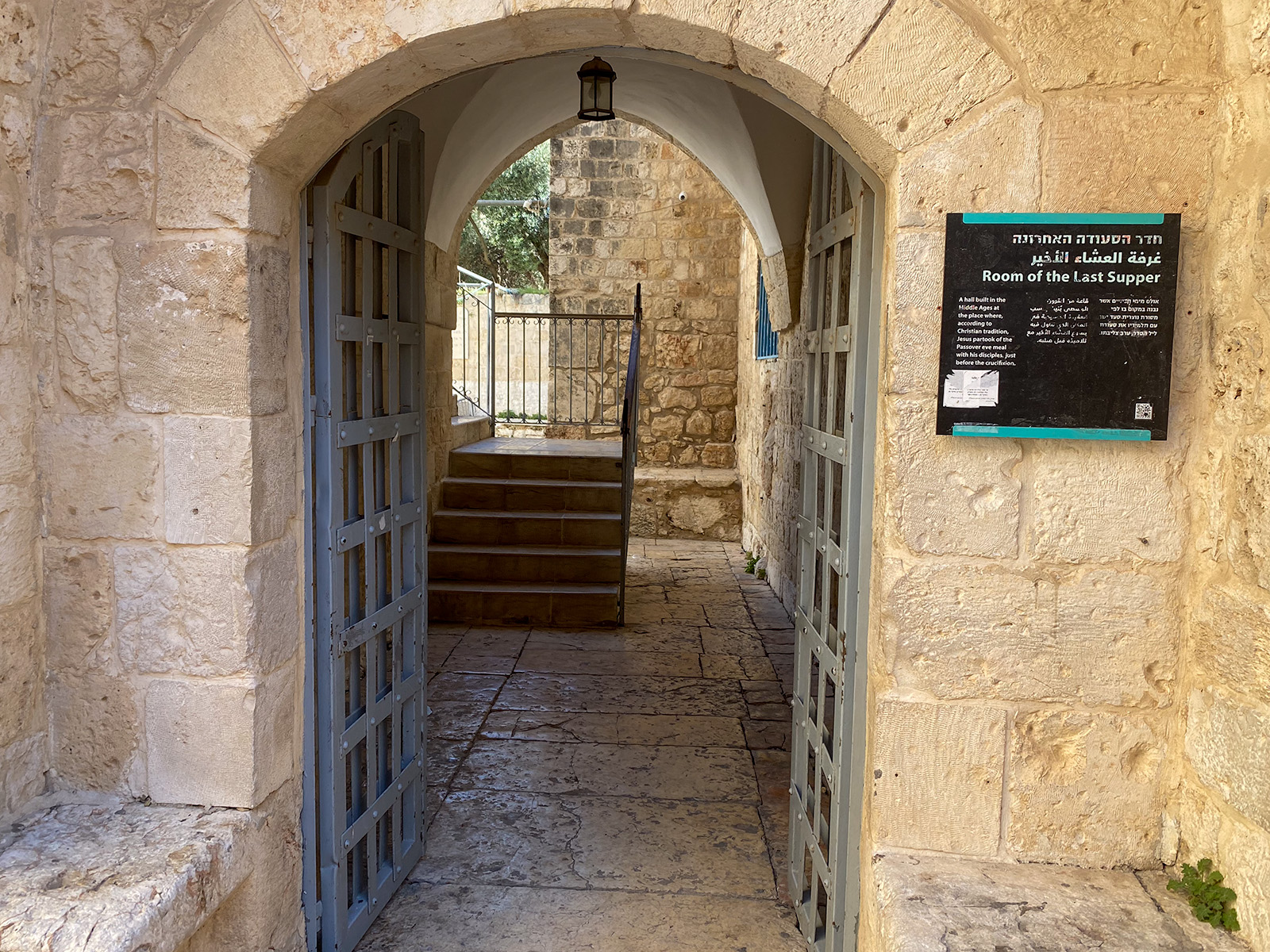
This doorway leads to the traditional Upper Room (Cenacle), located on Mount Zion just south of Zion Gate. According to Christian tradition, this is the place where Jesus shared the Last Supper with His disciples on the night before His crucifixion (Matt. 26:17–30; Mark 14:12–26; Luke 22:7–38).

The room has also long been associated with several events that followed the Resurrection, including Jesus’s appearances to His disciples and, by tradition, the gathering place of the early Christian community. Although the present building dates primarily to the Crusader period, it stands on a site that has been revered by pilgrims for many centuries.

Upper Room

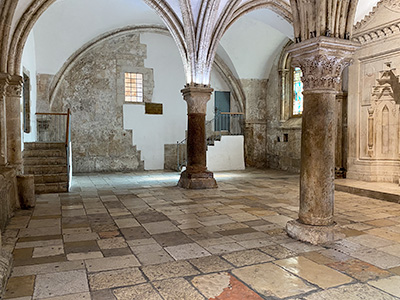
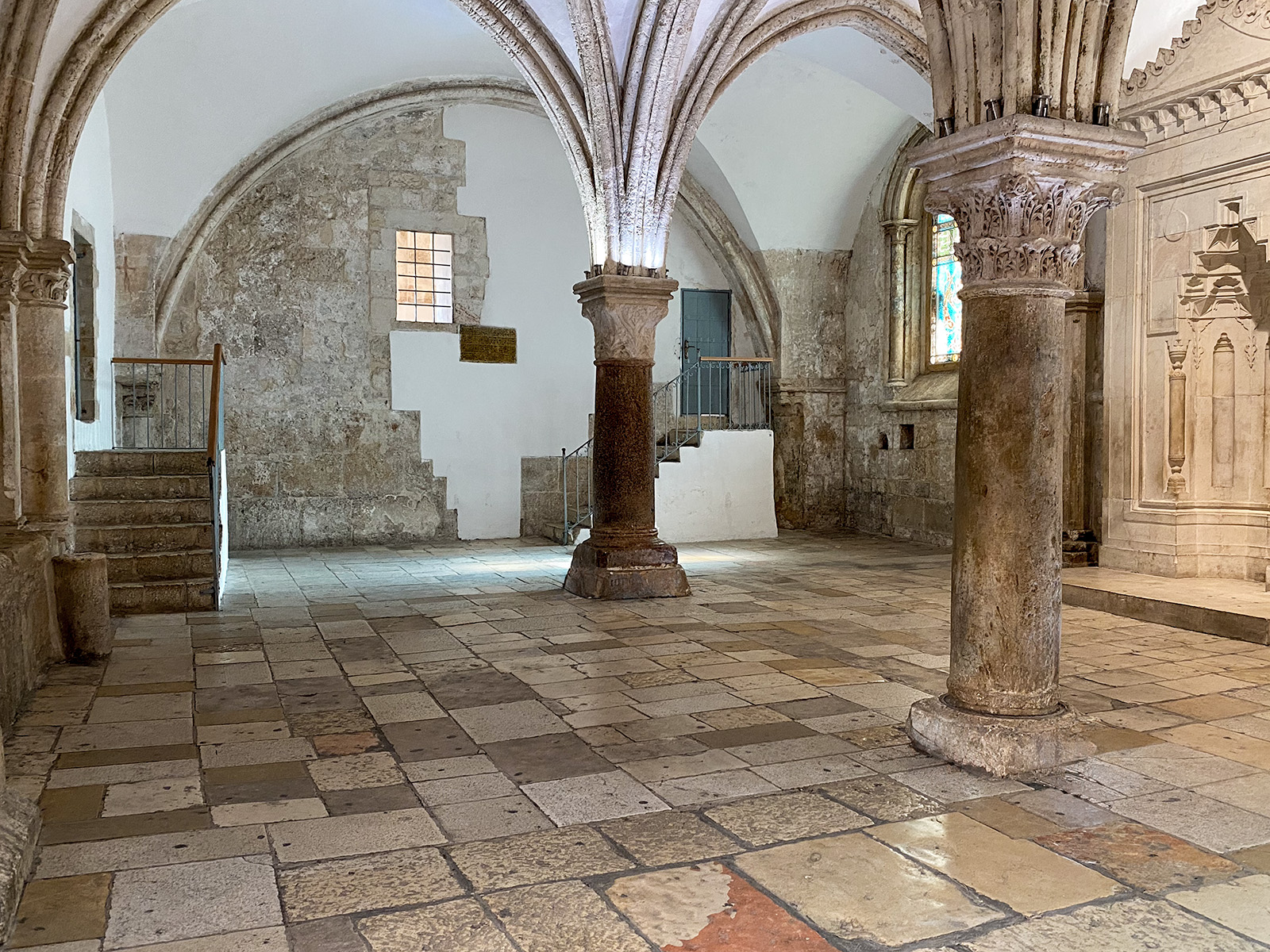
The present Upper Room is a Gothic hall built by the Crusaders in the twelfth century, with graceful vaulted ceilings, carved capitals, and slender columns reflecting medieval architectural style. While the room is not the original first-century structure, it preserves the longstanding tradition of this sacred location.

For Christians, the Upper Room is remembered as the setting of the Last Supper, where Jesus instituted the sacrament of the bread and wine and gave His disciples the commandment to love one another. It remains one of Jerusalem’s most significant pilgrimage sites.

Upper Room

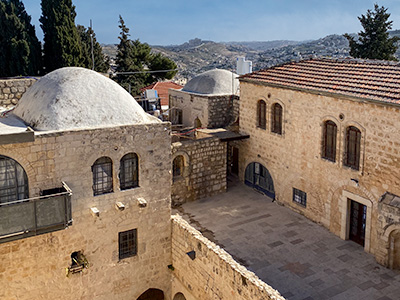
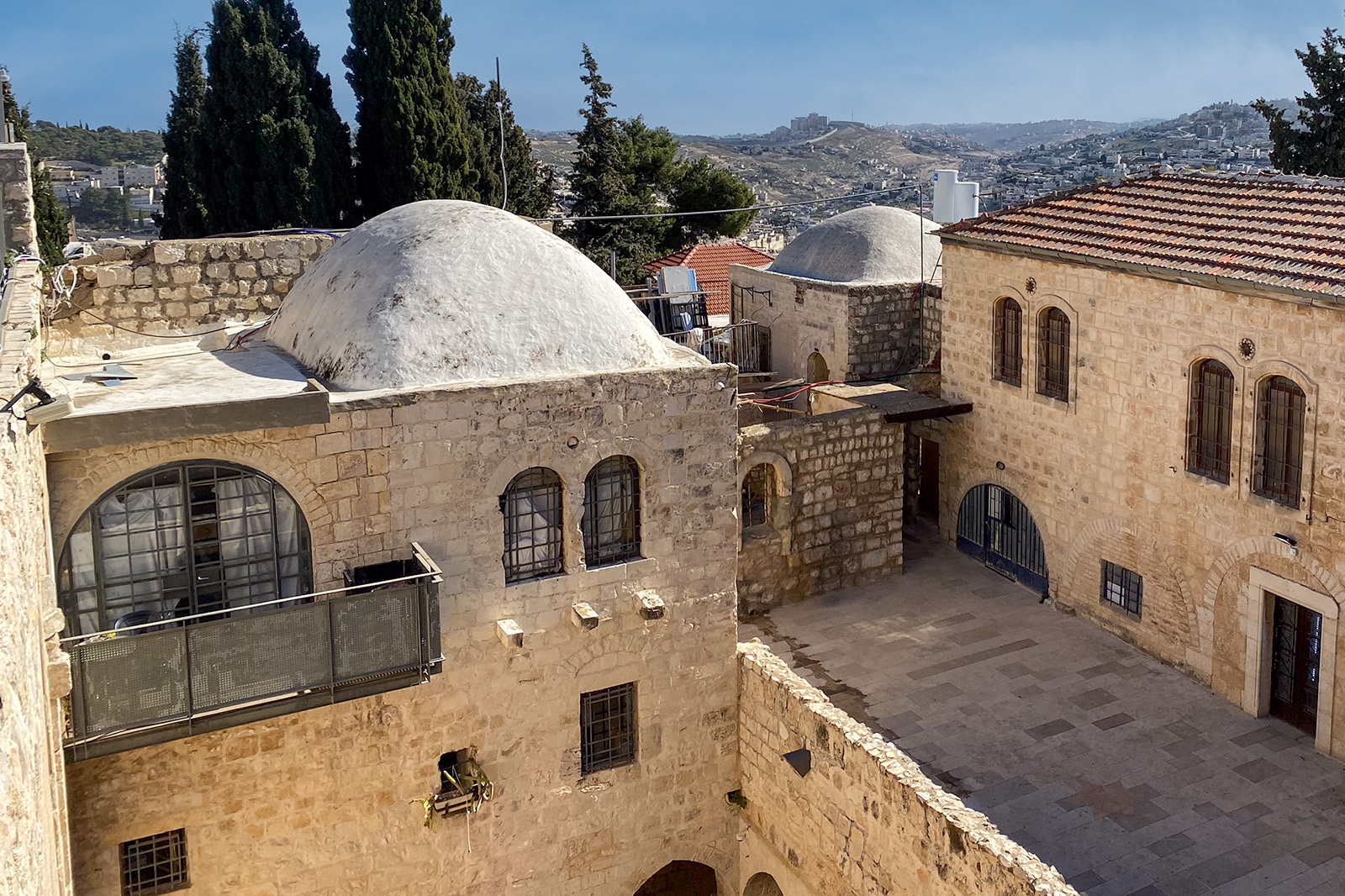
This courtyard lies directly beneath the Upper Room. The building has served many different religious communities over the centuries, and the surrounding structures reflect the site’s long and complex history.

The lower level is traditionally identified as the Tomb of David, a place revered in Jewish tradition since the Middle Ages, although most archaeologists believe King David was originally buried in the City of David rather than on Mount Zion. Today, the Upper Room above and the traditional Tomb of David below make this one of Jerusalem’s most important sites for both Christians and Jews.

David's Tomb

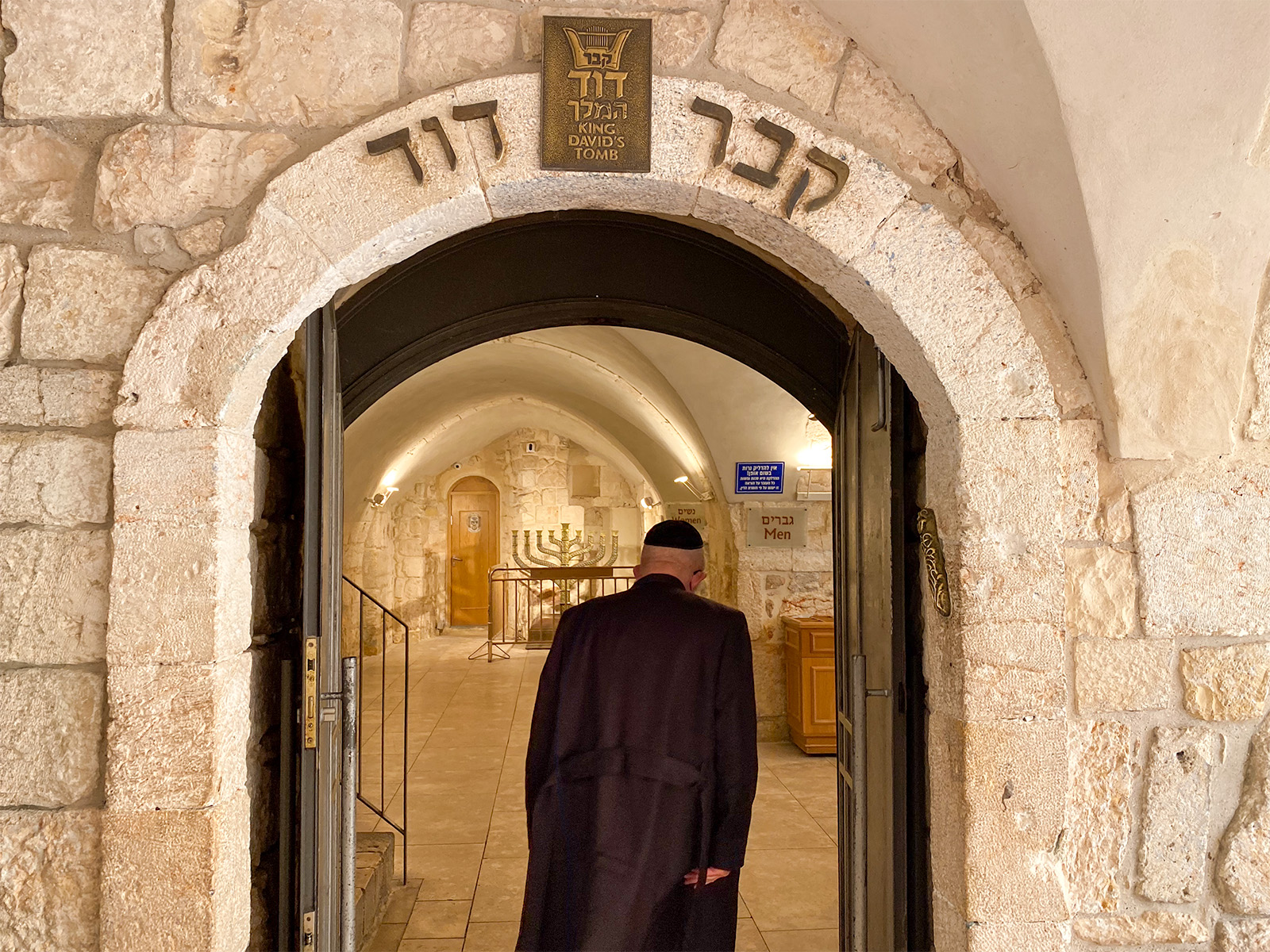
This entrance leads to the traditional Tomb of King David, located beneath the Upper Room on Mount Zion. Separate entrances are provided for men and women. The men’s prayer room is immediately to the right, while the women’s section is located farther back within the building.

Although this has been revered as David’s burial place since the Middle Ages, the Bible states that David was buried in the City of David (1 Kgs. 2:10). Most archaeologists therefore believe his actual tomb lies somewhere in the ancient City of David, not on Mount Zion.

David's Tomb

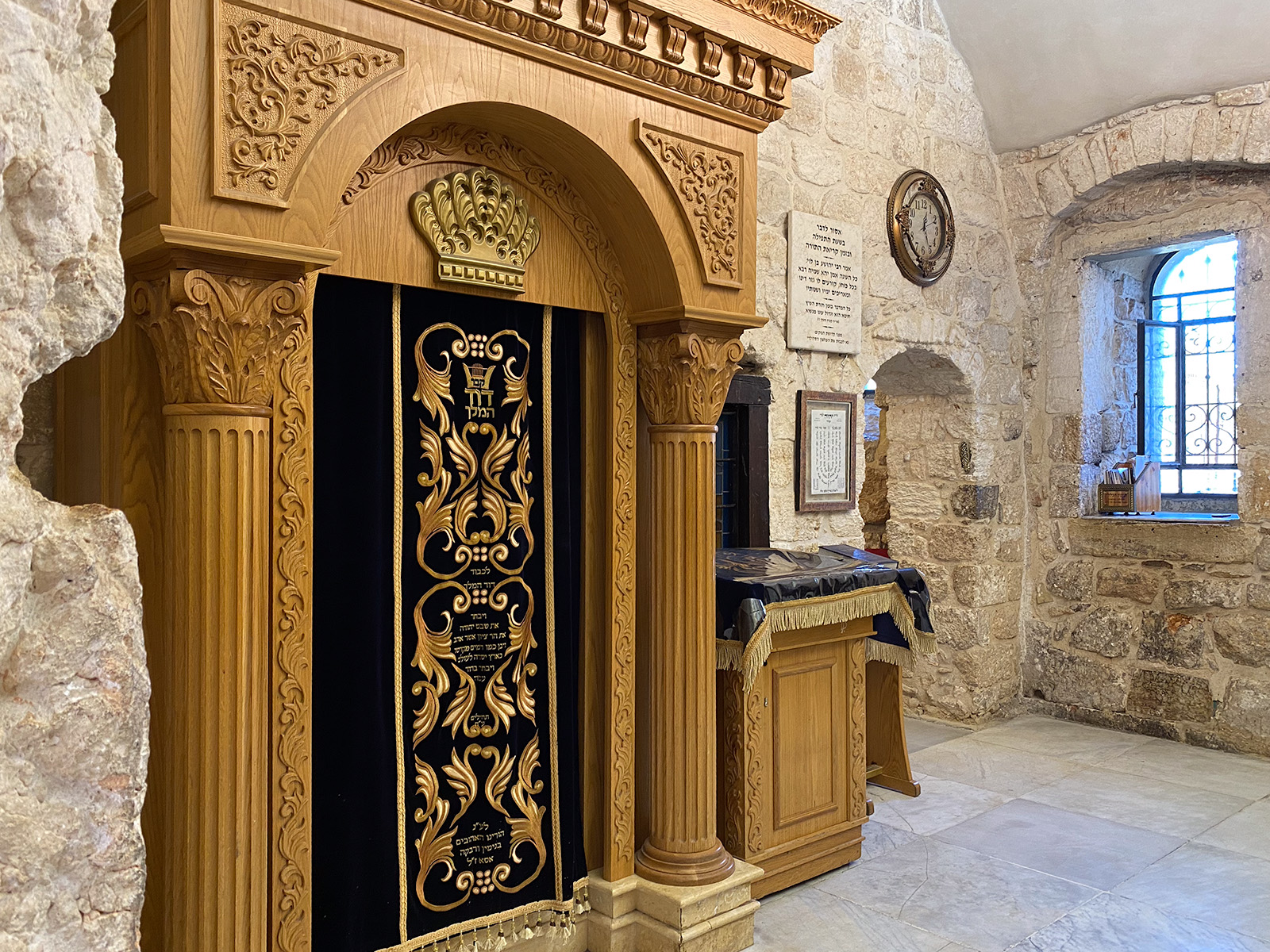
At the center of the room stands the cenotaph, or memorial tomb, draped with an embroidered cloth. The Hebrew inscription above it reads “King David” (דוד המלך), identifying the figure honored at this site.

Whether or not this is David’s actual burial place, the site has been a center of Jewish prayer and devotion for centuries. Many visitors come to honor Israel’s greatest king, remembered as the shepherd who united the nation, established Jerusalem as its capital, and composed many of the Psalms.

David's Tomb

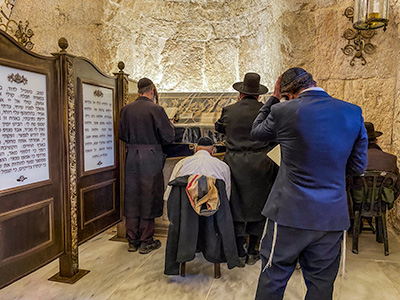
Jews gather around the traditional tomb to pray, read the Psalms, and reflect on the life of King David. The atmosphere is one of quiet reverence, with many worshippers spending extended periods in personal devotion.

For Jews around the world, David represents the ideal king of Israel and the ancestor of the promised Messiah. Regardless of the tomb’s historical authenticity, this remains one of Jerusalem’s most important places of Jewish pilgrimage and prayer.

Peter In Gallicantu

The Church of Saint Peter in Gallicantu crowns the eastern slope of Mount Zion. The Latin name Gallicantu means “the rooster crowed,” recalling the place where Peter denied knowing Jesus three times before the rooster crowed, just as Jesus had foretold (Matt. 26:69–75). Tradition has associated this hillside with the house of the high priest Caiaphas since at least the Byzantine period.

Seen here from the Mount of Olives with a telephoto lens, the church stands prominently on the steep eastern slope of Mount Zion above the Kidron Valley. Its large domed roof and distinctive stone exterior make it an easily recognizable landmark on the hillside.

Peter In Gallicantu
Looking east from the grounds of Saint Peter in Gallicantu, visitors enjoy a sweeping panorama across the Kidron Valley to the western slopes of the Mount of Olives. The hillside is covered with one of the world’s oldest and largest Jewish cemeteries, where generations of Jews have desired to be buried in anticipation of the coming of the Messiah.

This view also helps visitors appreciate the dramatic setting of Jesus’s final night. After His arrest in the Garden of Gethsemane, Jesus was led across the Kidron Valley to the residence of the high priest. While Jesus was being questioned inside, Peter waited outside in the courtyard, where he denied knowing his Master before the rooster crowed.

Peter In Gallicantu

The modern church was completed in 1931 over earlier Byzantine and Crusader remains. Its beautiful chapel commemorates Peter’s denial and his later repentance, while colorful mosaics and stained glass portray scenes from the Passion of Christ.

The church also preserves extensive archaeological remains beneath its floor, including ancient cisterns, caves, and the foundations of wealthy homes dating to the Second Temple period.

Peter In Gallicantu

Bronze statues outside the church portray the dramatic moment when Peter denied knowing Jesus before the rooster crowed. Nearby figures represent the servant girl and others who recognized Peter as one of Jesus’ disciples.

The sculptures remind visitors that Peter’s failure was not the end of his story. After the Resurrection, Jesus lovingly restored Peter and commissioned him to “feed my sheep,” making this place not only a reminder of denial, but also of forgiveness and redemption.

Peter In Gallicantu

These ancient stone steps date to the first century and formed part of the roadway connecting the City of David, the Upper City, and the Temple Mount. Although no one can say with certainty that Jesus walked on these particular steps, they are among the few streets in Jerusalem that survive from His lifetime.

Many scholars believe Jesus, His disciples, and countless pilgrims traveling between the city and the Temple would have used this route during the Second Temple period.

Peter In Gallicantu
Looking down the ancient staircase, visitors can appreciate how this roadway descended toward the Kidron Valley and the Garden of Gethsemane beyond. The steps provide a tangible connection to the Jerusalem Jesus knew during the final days of His ministry.

Whether or not Jesus Himself walked this exact route after His arrest, the stones remain an authentic part of first-century Jerusalem and vividly illustrate the city’s steep terrain.

Peter In Gallicantu
Beneath the church is a deep rock-hewn chamber traditionally identified as a holding cell where prisoners were confined. Holes carved into the rock were used to secure ropes or chains that restrained those awaiting interrogation or punishment.

While tradition suggests Jesus may have been held here before appearing before the Sanhedrin, the identification cannot be confirmed archaeologically. Even so, the chamber provides a sobering glimpse into the harsh conditions endured by prisoners in the ancient world.

Peter In Gallicantu

Prisoners were lowered through the narrow opening above into the underground chamber using ropes. Once inside, escape was impossible without assistance from those above.

The dramatic descent helps visitors visualize the confinement described in several biblical passages and gives added meaning to Psalm 88, which Christian tradition associates with Christ’s lonely night before His crucifixion.

Peter In Gallicantu

Standing within the underground chamber, visitors are surrounded by solid bedrock. The staircase visible today is a modern addition that provides safe access, but in antiquity prisoners entered through the opening above, where they were lowered by ropes into the chamber. The small, enclosed space conveys the isolation and darkness experienced by those imprisoned here.

Whether or not this chamber actually held Jesus, it powerfully illustrates the suffering, humiliation, and abandonment He endured during the hours leading to His trial and crucifixion.

Zion Gate

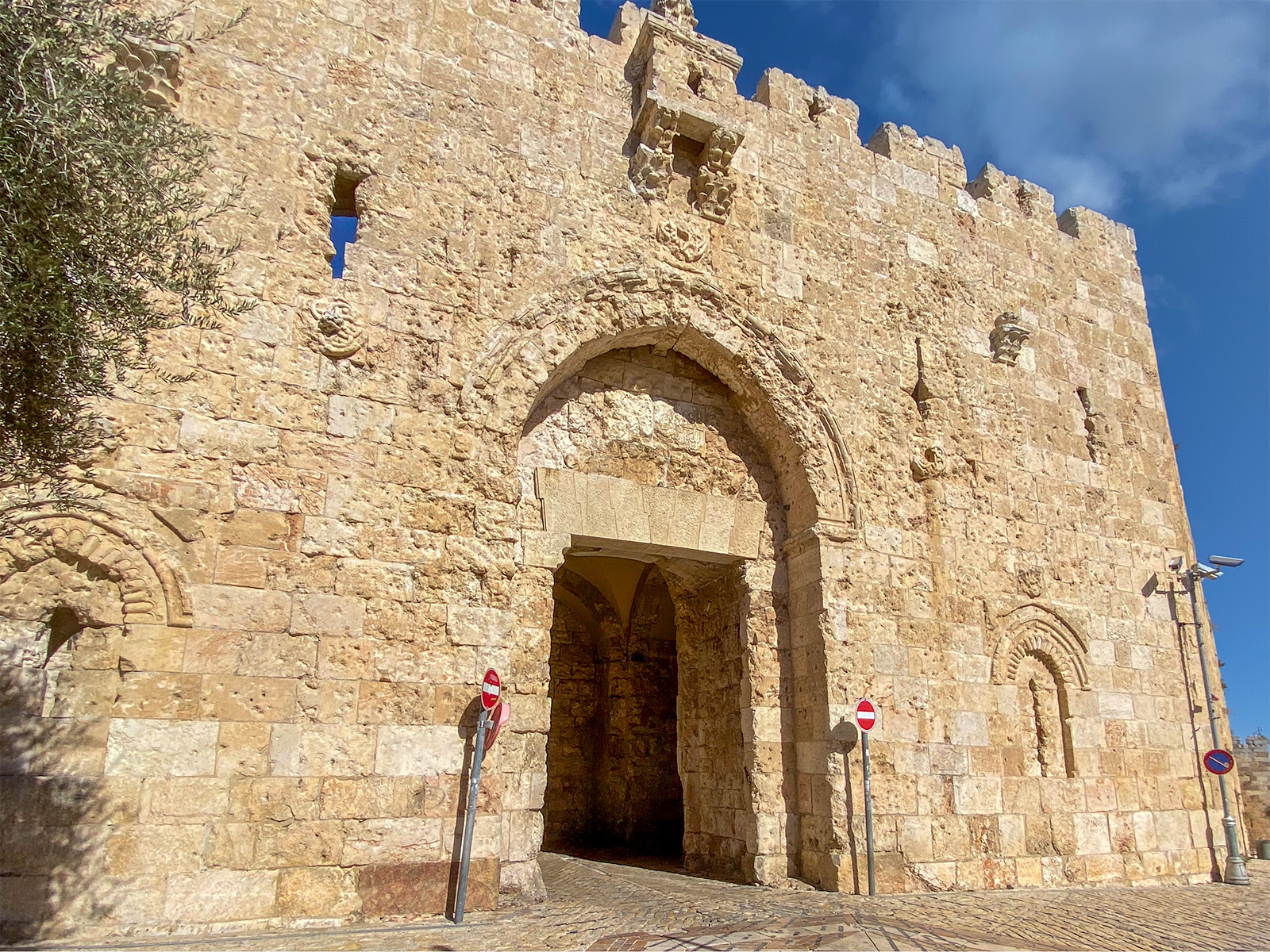
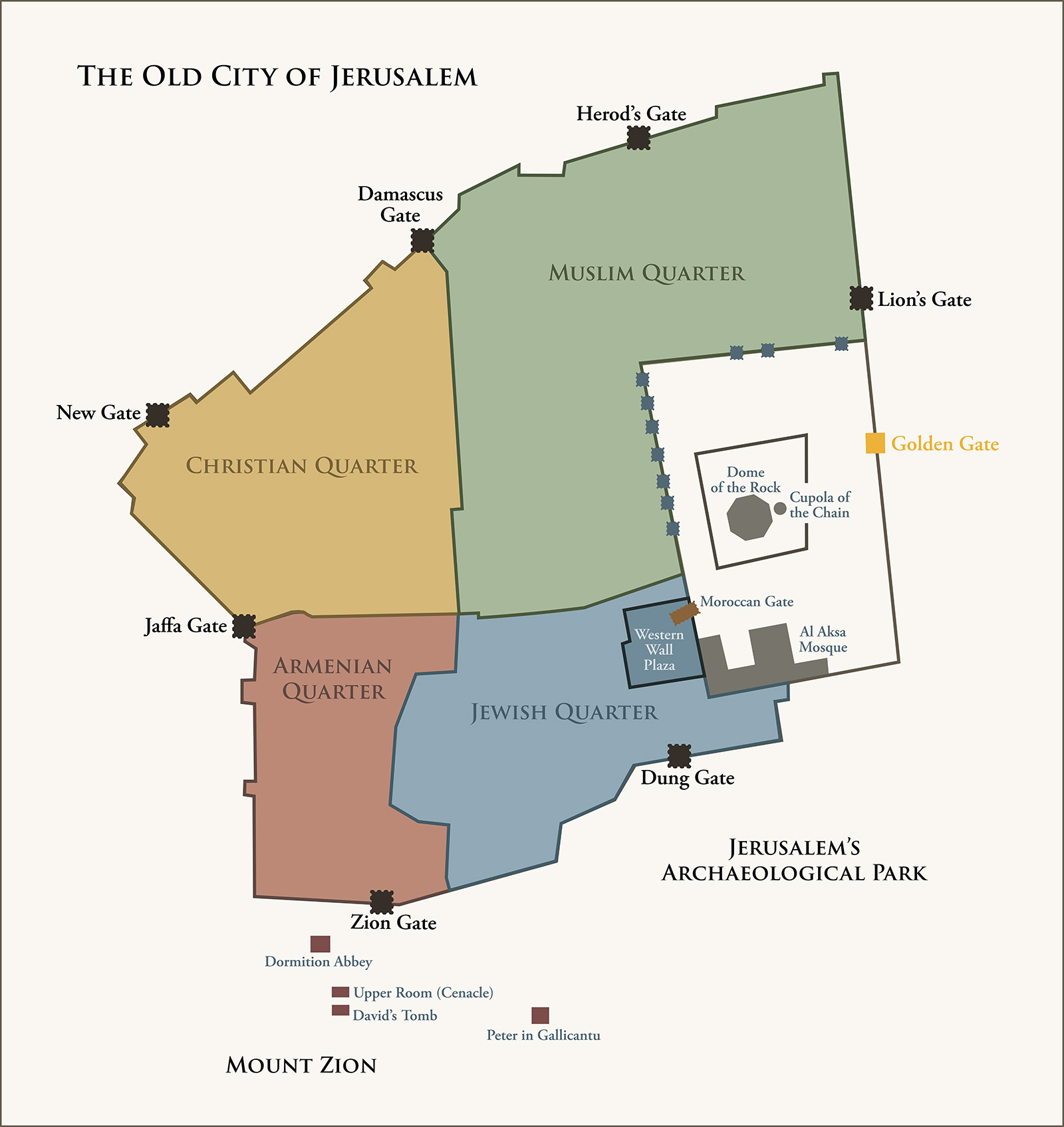
Built in 1540 by the Ottoman sultan Suleiman the Magnificent, Zion Gate forms the southern entrance to Jerusalem’s Old City and provides the most direct access to Mount Zion. Beyond the gate lie several of the city’s most important Christian and Jewish sites, including the Upper Room, David’s Tomb, and the Church of Saint Peter in Gallicantu.

The gate also bears the scars of more recent history. Numerous bullet holes visible in its stonework date from the fierce fighting during Israel’s War of Independence in 1948, when Israeli and Jordanian forces battled for control of the Old City. Today, Zion Gate stands as both a reminder of Jerusalem’s turbulent past and a welcoming entrance to one of its most historically significant quarters.

Zion Gate

Armenian Patriarchate Street is the principal thoroughfare through Jerusalem’s Armenian Quarter. Looking south, the road leads directly to Zion Gate, while the bell tower of Dormition Abbey rises above the rooftops beyond the city wall.

This quiet street has served Armenian pilgrims and residents for centuries. Today it remains one of the most peaceful corners of the Old City, lined with monasteries, churches, and historic stone buildings.

Armenian Patriarchate Street

This entrance leads into the Armenian Patriarchate, the center of the Armenian Apostolic Church in the Holy Land. The sign above the doorway is written in Armenian, Arabic, and French, identifying the Convent of St. James, the historic monastery surrounding the Cathedral of St. James.

The Armenian presence in Jerusalem dates back to the fourth century, making it one of the oldest continuous Christian communities in the city. Much of the Armenian Quarter remains privately owned by the patriarchate and is not generally open to casual visitors.

Armenian Patriarchate Street

Looking north along Armenian Patriarchate Street, the white dome rising above the walls belongs to the Cathedral of St. James, one of Christianity’s oldest and most important Armenian churches. Hidden within the surrounding walls are the monastery, clergy residences, library, and other buildings that make up the Armenian Patriarchate.

Unlike the busier streets of the Christian and Jewish Quarters, this section of the Armenian Quarter retains a quiet, residential atmosphere that reflects more than sixteen centuries of Armenian life and worship in Jerusalem.

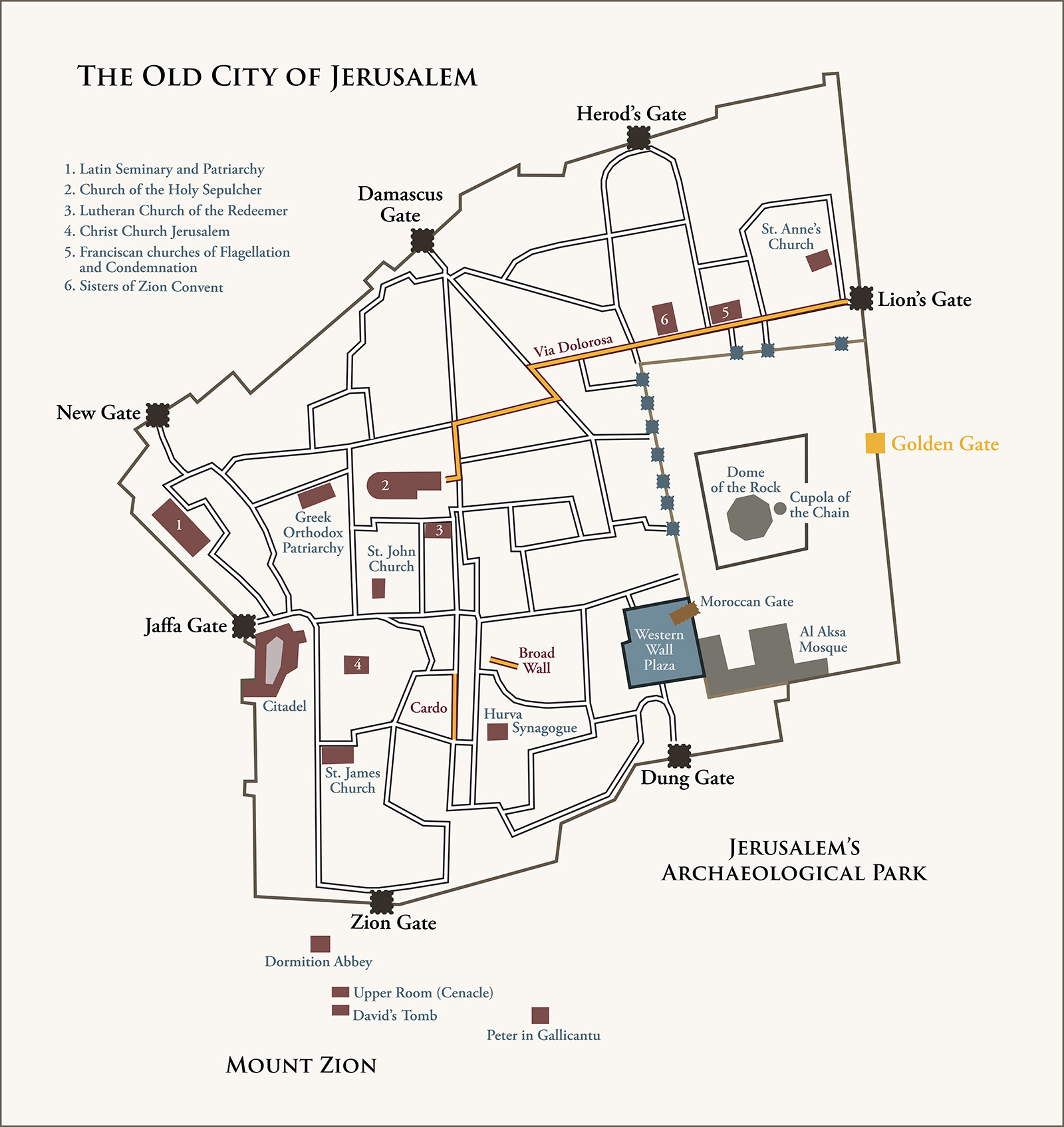
Click the map to show or hide the quarters of the Old City

Map