Scroll To Top
Scroll To Top

Jerusalem — Archaeological Park Photo Gallery

Click the title to view map


Jerusalem Overview

Introduction

Jerusalem Archaeological Park

At the southern and southwestern foot of the Temple Mount lies one of Jerusalem’s richest archaeological areas. The Jerusalem Archaeological Park preserves remains spanning many centuries, but it is especially important for understanding Jerusalem during the Second Temple period, when thousands of Jewish pilgrims came here to worship.

Here we can still walk along a first-century street beside the Temple Mount, see ritual baths used for purification, and stand beneath Robinson’s Arch, once part of a monumental approach leading toward the Temple complex. Nearby, broad stairways led worshippers toward the entrances in the southern wall. Later generations built over these remains, leaving traces of Roman, Byzantine, and early Islamic Jerusalem.

Few places allow us to experience so many layers of Jerusalem’s history in one setting—and to stand amid the physical remains of the city known to Jesus and the pilgrims who came to worship at the Temple.

Slide Presentation Major Events

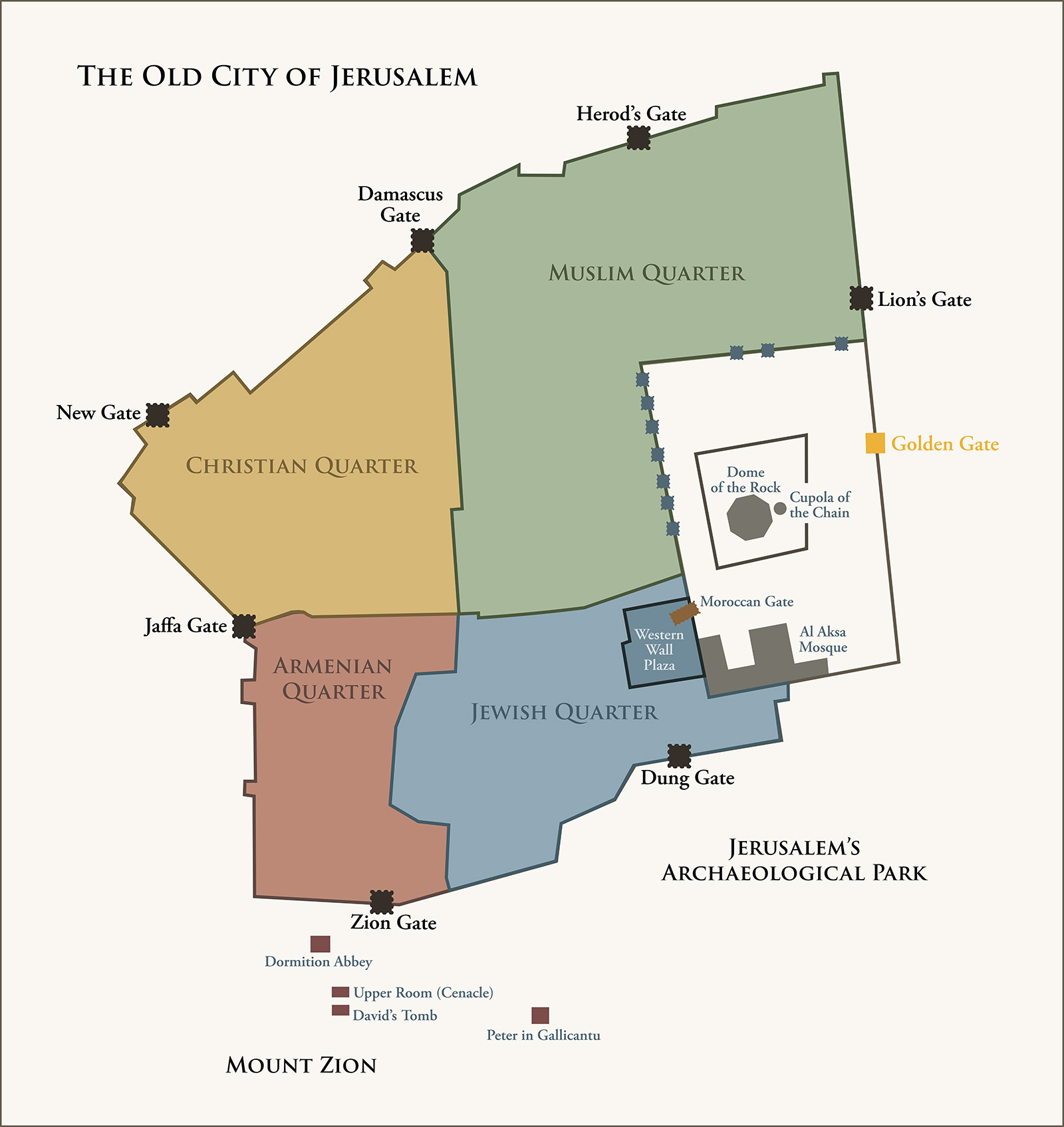
Click the map to show or hide the quarters of the Old City

Map

Major Events at Jerusalem

Jerusalem Archaeological Park

The southern wall of the Temple Mount rises above the excavations of the Jerusalem Archaeological Park. The wall preserves construction from several periods, while the archaeological remains below reveal structures that once crowded the southern approaches to the Temple Mount.

In the Second Temple period, this was one of Jerusalem’s busiest areas. Pilgrims approaching the Temple encountered broad stairways, monumental entrances, streets, ritual baths, and public buildings—a landscape dramatically different from the open archaeological park seen today. Excavations have revealed remains ranging from the Second Temple period through the Roman, Byzantine, and early Islamic eras.

Jerusalem Archaeological Park

The massive retaining wall dominates this view across the archaeological remains south of the Temple Mount. The carefully fitted courses preserve the engineering achievement required to enlarge and support the Temple platform during the late Second Temple period.

Below and beside the wall lie the remains of later buildings constructed after the Roman destruction of Jerusalem. Some incorporated stones salvaged from earlier Herodian structures, allowing a visitor standing in one place to see evidence of both the monumental Jerusalem of the Second Temple period and the cities that subsequently arose among its ruins.

The two small holes visible in the face of the stone were cut into the masonry at some later time. I would leave their precise purpose unstated until we can verify it. Similar holes elsewhere in the Temple Mount walls were cut during later alterations—for example, to help attach plaster—but I do not yet have enough evidence to say that is what these two were used for.

Jerusalem Archaeological Park

Looking across the excavations south of the Temple Mount, visitors can see how Jerusalem was repeatedly built, destroyed, and rebuilt. Walls, rooms, streets, and foundations from different periods survive at different levels, creating an archaeological cross-section through centuries of the city’s history.

Especially prominent here are remains from the early Islamic period, when the Umayyad rulers constructed a group of large buildings south and southwest of the Temple Mount in the late seventh and early eighth centuries. Their builders frequently reused architectural stones from earlier structures—a practice archaeologists call spolia.

Jerusalem Archaeological Park

These projecting stone supports belong to structures constructed south of the Temple Mount during the Umayyad period, in the early eighth century. Archaeological investigations have identified a series of large buildings here, including rooms arranged around courtyards.

Many of the rooms contained projecting pilasters that supported arches and the ceilings above them. The buildings also incorporated reused architectural elements from earlier periods, demonstrating how Jerusalem’s builders continually adapted the remains of the city that preceded them.

Jerusalem Archaeological Park

These enormous stones provide some of the Archaeological Park’s most dramatic evidence of the Roman destruction of Jerusalem in AD. 70. Stones from the Temple Mount enclosure and associated monumental structures were hurled down onto the street below, where their tremendous weight shattered portions of the pavement. Archaeologists deliberately left part of this collapse in place so visitors could see the destruction where it occurred.

For Christian visitors, the scene inevitably recalls Jesus’ warning concerning the magnificent buildings of the Temple: “There shall not be left here one stone upon another, that shall not be thrown down” (Matt. 24:2). The surviving retaining wall itself was not the Temple building; what these fallen stones vividly illustrate is the enormous scale of the destruction that overtook the Temple complex and Jerusalem during the Roman siege.

Jerusalem Archaeological Park

Layers of ancient construction fill the area immediately south of the Temple Mount. Rather than representing a single moment in Jerusalem’s history, the excavations expose remains from successive periods—including Second Temple, Roman, Byzantine, and early Islamic Jerusalem.

This layering is one of the great values of the Jerusalem Archaeological Park. Walls that appear at first to be a confusing mass of stone become a record of generations repeatedly building upon, reusing, and sometimes destroying what earlier generations had left behind.

Jerusalem Archaeological Park

The Double Gate, the western of the two entrances traditionally known as the Hulda Gates, is partly concealed today by later construction. During the late Second Temple period, worshipers approaching from the south entered through gateways in this wall and proceeded through passageways beneath the Temple Mount platform before emerging above in the Temple precincts.

The surviving entrance has been substantially altered over the centuries, but portions of its Herodian construction remain. This was part of the monumental southern entrance complex used when the Temple stood above during the time of Jesus.

Jerusalem Archaeological Park

This view looks toward the southern wall of the Temple Mount, with later structures and excavated remains standing immediately below it. The crenellated upper portion of the wall belongs to Jerusalem’s much later history, while lower portions preserve elements of the enormous Temple Mount enclosure developed during the Second Temple period.

The excavations below the wall demonstrate how extensively this area continued to be occupied after the Roman destruction of Jerusalem. Byzantine and especially Umayyad builders constructed substantial buildings here, sometimes reusing stones and architectural elements from earlier structures.

Jerusalem Archaeological Park

The blocked arches visible in the southern wall mark the remains of the Triple Gate, the eastern of the two monumental southern entrances traditionally called the Hulda Gates. During the Second Temple period, worshipers entered through gateways here and followed passageways beneath the Temple Mount platform before ascending into the sacred precinct above.

The entrances were later blocked and altered, and portions of the masonry visible today belong to subsequent rebuilding. Nevertheless, the location preserves one of Jerusalem’s most important surviving connections with the way worshipers approached the Temple during the first century.

Jerusalem Archaeological Park

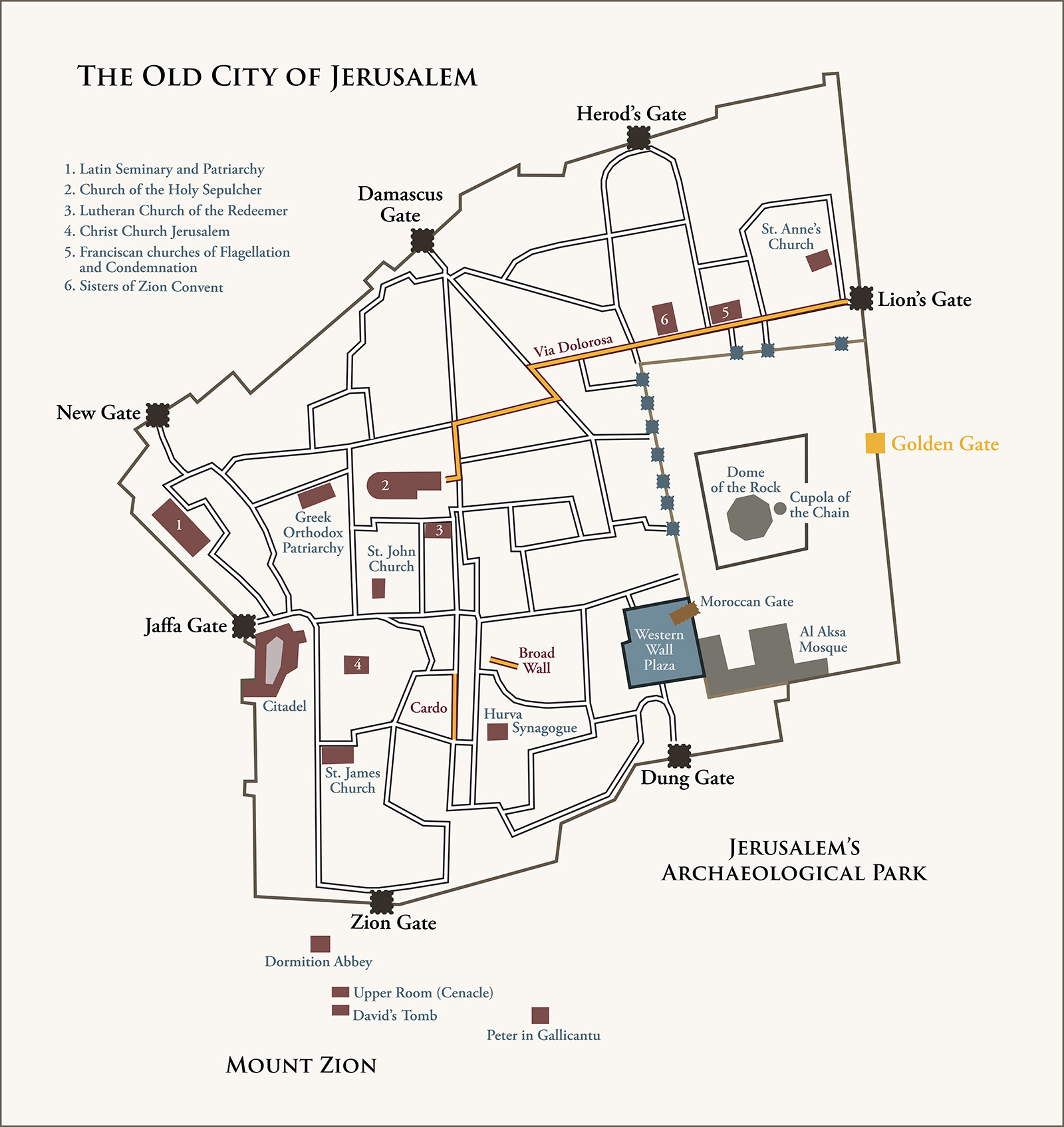
The Jerusalem Archaeological Park, also known as the Davidson Center, lies along the southern and southwestern walls of the Temple Mount, immediately south of the Western Wall Plaza. The park preserves archaeological remains from several periods of Jerusalem’s history, with particular emphasis on the monumental structures surrounding the Temple Mount during the Second Temple period.

For today’s traveler, the park provides one of the best places in Jerusalem to visualize the city encountered by Jesus and the thousands of Jewish pilgrims who came to worship at the Temple. Visitors can walk beside Herodian retaining walls, see the remains of Robinson’s Arch and the great interchange that once carried people toward the Temple, climb the monumental steps leading toward the Huldah Gates, and examine streets and buildings buried in the Roman destruction of AD 70. Rather than viewing isolated ruins, the traveler can stand within the remains of the ancient city and begin to understand how the Temple Mount functioned at the time of the New Testament.