Scroll To Top
Scroll To Top

Bethlehem Photo Gallery

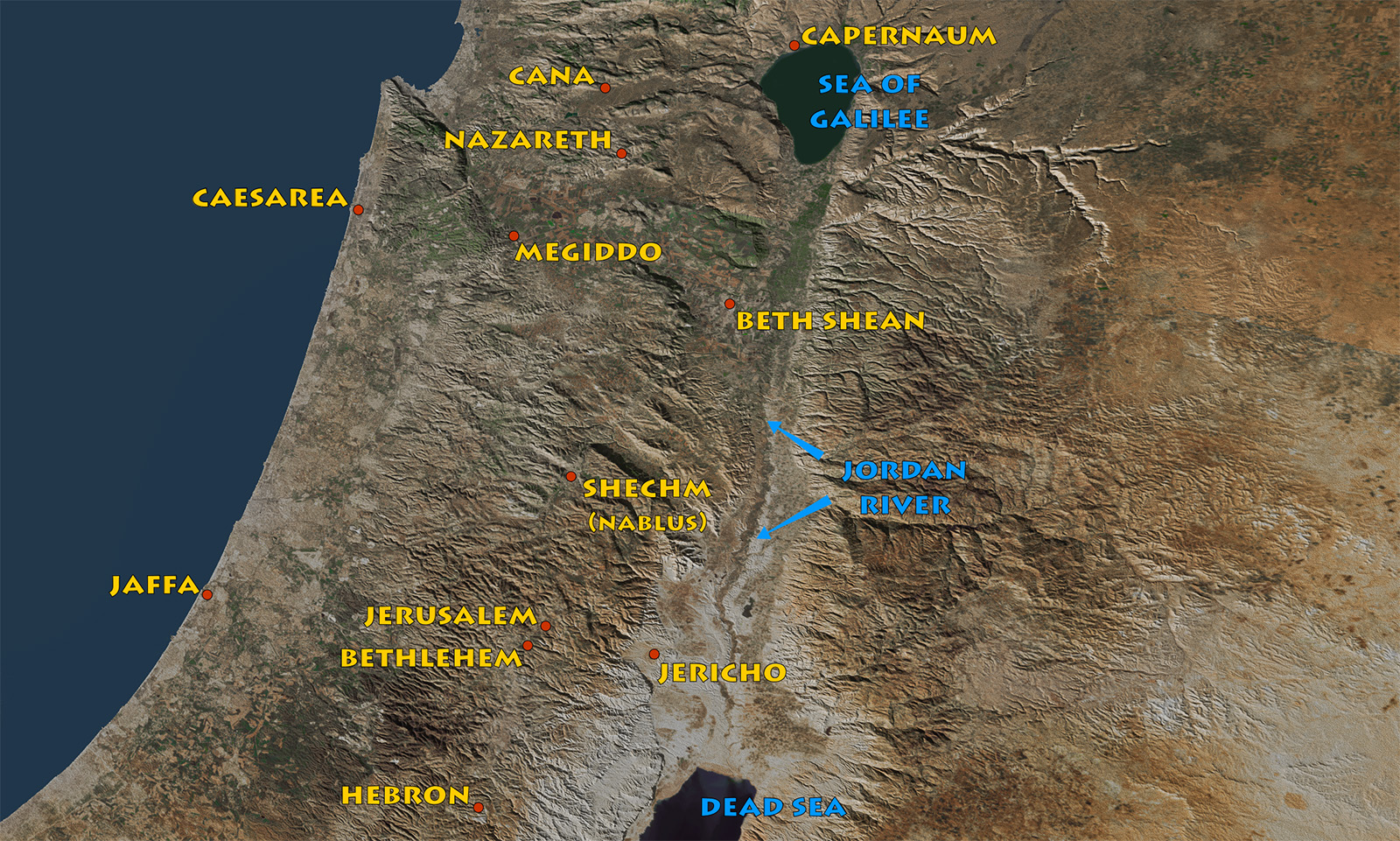
Click the title to view map


Site Overview

  • Region: Judean Hill Country
  • Biblical Territory: Judah
  • Modern Site: Bethlehem, West Bank
  • Nearby Landmark: Shepherds’ Field (Beit Sahour)
  • Primary Scripture References: Matt. 2:1–12; Luke 2:1–20; Micah 5:2
Church of the Nativity

Few places in the world have shaped history as profoundly as Bethlehem. Although little more than a small Judean village in the days of Jesus, it became the setting for one of the most significant events in human history—the birth of the Savior. Long before that sacred night, the prophet Micah foretold that Israel's promised ruler would come from Bethlehem, the City of David (Micah 5:2). Centuries later, Joseph and Mary arrived here to comply with a Roman census, fulfilling that ancient prophecy.

Bethlehem - Beggar Woman

Today Bethlehem is one of Christianity’s most treasured pilgrimage destinations. At its heart stands the Church of the Nativity, one of the oldest continuously used churches in the world. The Grotto of the Nativity lies beneath the Church, revered by Christians for nearly seventeen centuries as the place where Jesus was born. The city also preserves other meaningful locations, including Shepherds’ Field, where angels announced the Savior’s birth to humble shepherds watching their flocks by night.

This gallery explores both the biblical story and the living city of Bethlehem. As you browse these photographs, you'll walk through the Church of the Nativity, descend into the grotto, visit Shepherds’ Field, and experience the remarkable Christmas celebrations that draw pilgrims from around the world. Along the way, you'll discover how history, archaeology, and enduring Christian tradition combine to make Bethlehem one of the most sacred places on earth.
Slide Presentation Major Events

Church of the Nativity

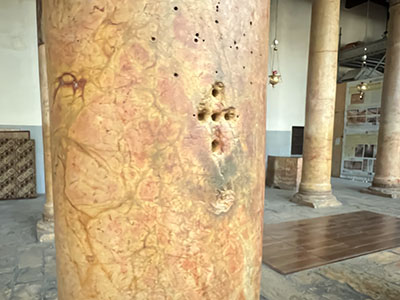
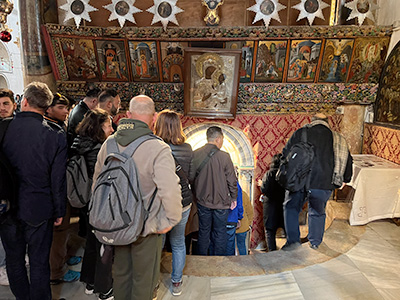
One of the Church of the Nativity’s great limestone columns bears five holes arranged in the form of a cross. For centuries, pilgrims have paused here to place the fingers of one hand into the openings while offering a prayer. Their exact origin remains uncertain. Some associate them with the Five Wounds of Christ, while others preserve legends of miraculous events connected with the church. Whatever their beginning, the polished stone testifies to countless generations of believers who have come to Bethlehem seeking to draw closer to the Savior.

Church of the Nativity

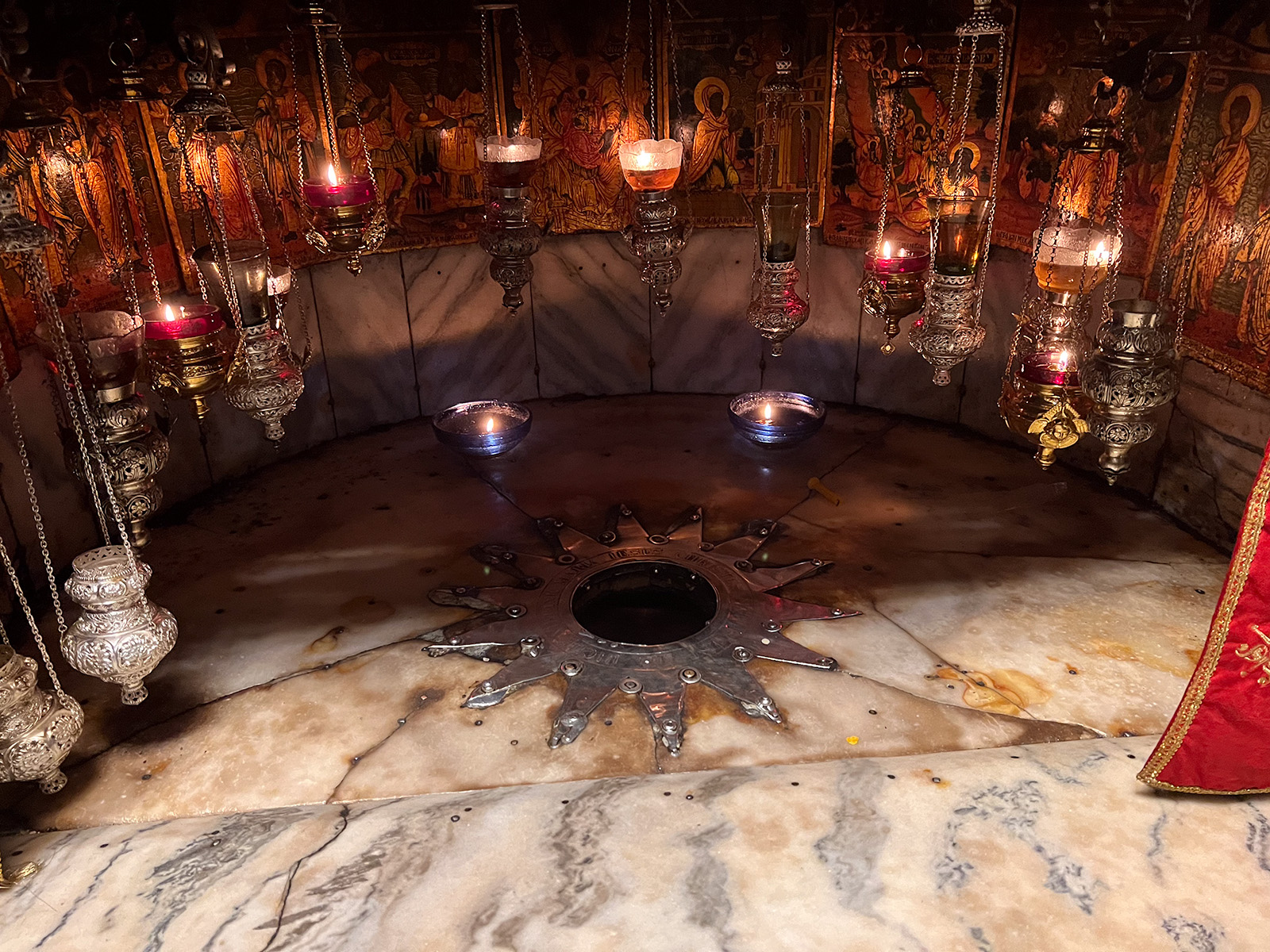
The fourteen points of the silver star beneath the altar remind visitors of Matthew’s genealogy—three sets of fourteen generations leading from Abraham to David, from David to the Exile, and from the Exile to Christ. The long story of God’s covenant with Israel reaches its fulfillment here, where Christians have remembered for centuries the birth of Jesus Christ.

Church of the Nativity

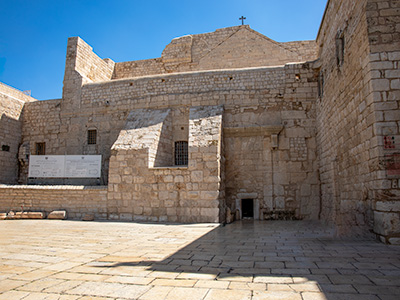
The fortified appearance of the Church of the Nativity reflects centuries of rebuilding following destruction by fire, earthquakes, and invasion. The original fourth-century church was commissioned by Constantine and his mother Helena, while much of the present structure dates from the sixth-century reconstruction under Emperor Justinian.

Church of the Nativity

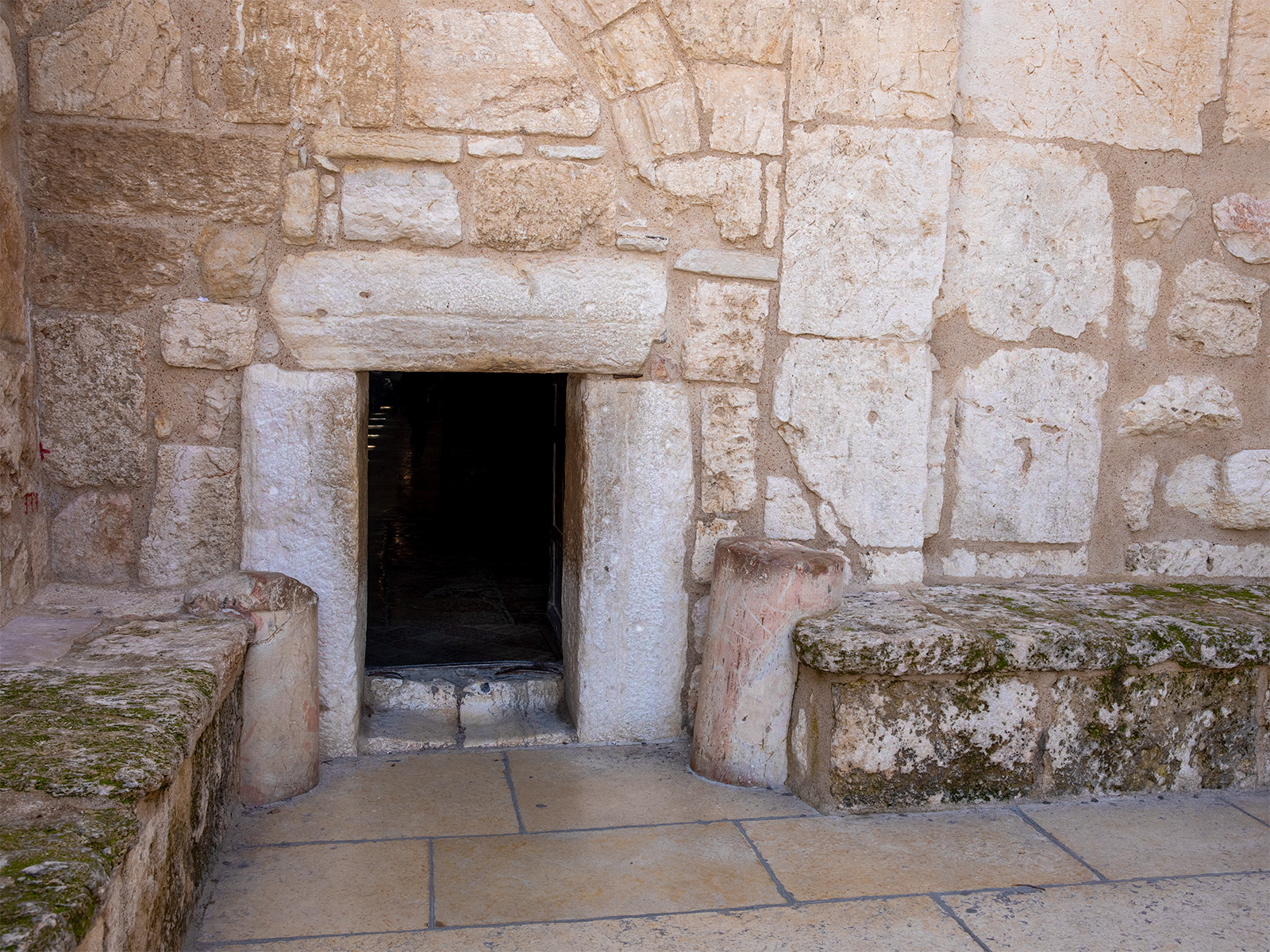
The present entrance to the church, known as the Door of Humility, was reduced to its present height during the Ottoman period. Visitors must stoop to enter, a reminder that Christians have long associated Bethlehem with humility before the Savior.

Church of the Nativity

This heavy wooden door preserves the character of earlier entrances to the church. Thick timbers, iron bands, and massive hinges reflect the need to protect one of Christianity’s most sacred shrines through centuries of political upheaval.

Church of the Nativity

The richly decorated sanctuary belongs to the Greek Orthodox Church, the largest custodian of the Church of the Nativity. Ornate icon screens, hanging lamps, and gilded decorations reflect centuries of Byzantine liturgical tradition.

Church of the Nativity

Suspended lamps and an elaborate processional cross illuminate the sanctuary where daily worship has continued for centuries. The lamps represent the various Christian communities that share responsibility for the holy site.

Church of the Nativity

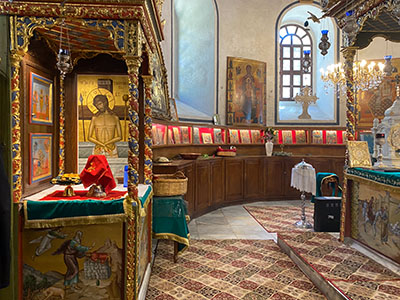
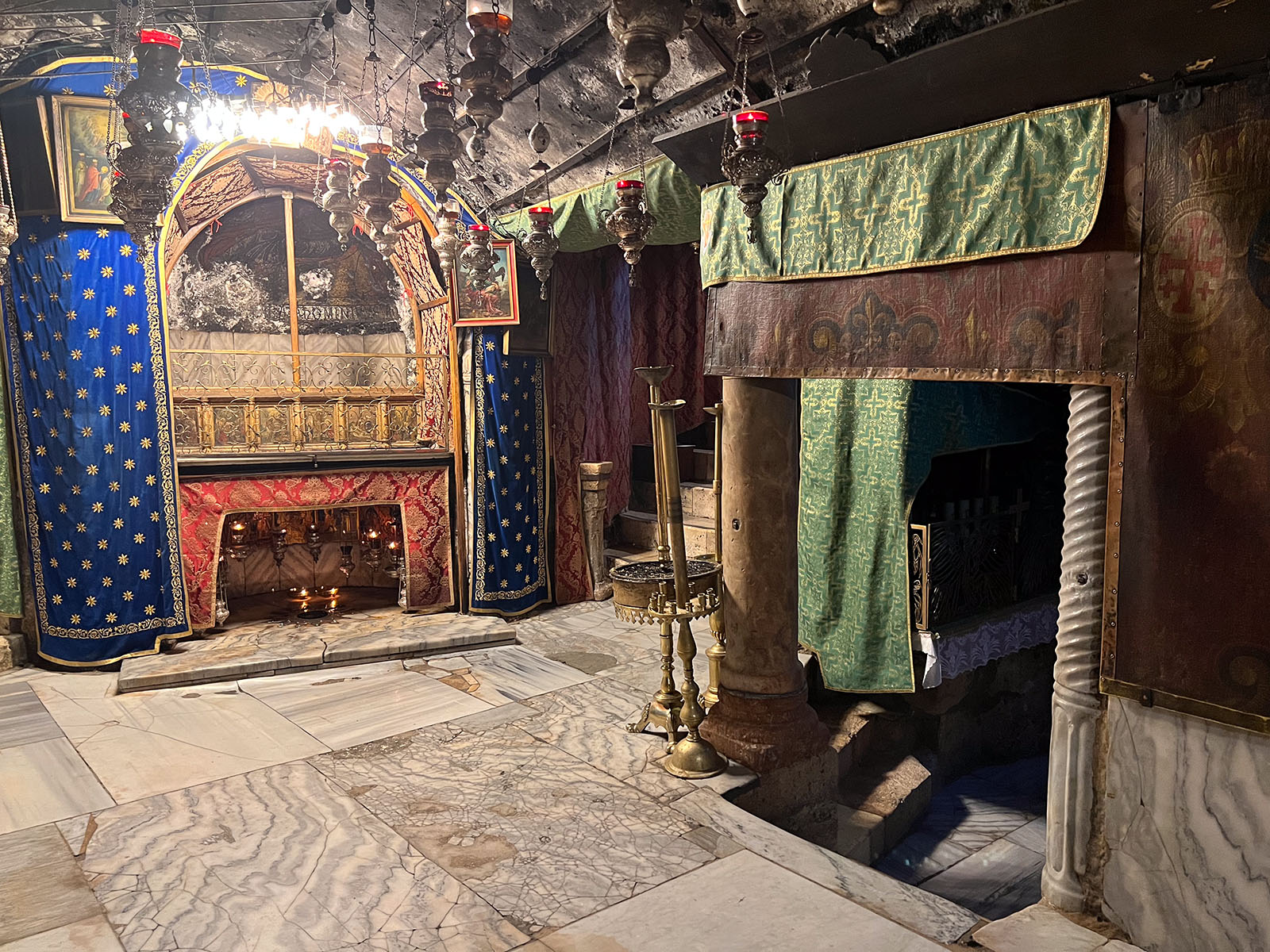
This rarely seen chapel lies within the Greek Orthodox section of the Church of the Nativity, an area generally closed to visitors. Its icons, ornate furnishings, and hanging lamps reflect centuries of uninterrupted Orthodox worship at one of Christianity’s holiest sites. The large icon on the left is Christ in His Humility (sometimes called The Bridegroom Christ), depicting Jesus after His scourging but before the Crucifixion. It reminds worshippers that the Child born in Bethlehem came into the world to offer Himself in love for the redemption of humanity. Although it may seem an unusual subject in a church commemorating Christ’s birth, it reflects the Orthodox tradition of viewing Christ’s birth, suffering, death, and Resurrection as one continuous work of redemption.

Church of the Nativity

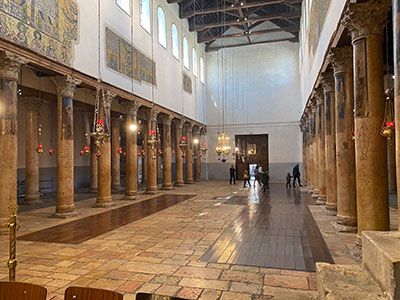
The spacious nave preserves much of Justinian's sixth-century basilica. Rows of rose-colored limestone columns lead worshipers toward the sanctuary, while high clerestory windows fill the church with soft natural light.

Church of the Nativity

The steps beneath the green drapery descend into the Chapel of the Manger, where tradition identifies the place Jesus was laid after His birth. Located only a few steps from the traditional birthplace, the chapel has been a place of Christian devotion for centuries.
Church of the Nativity

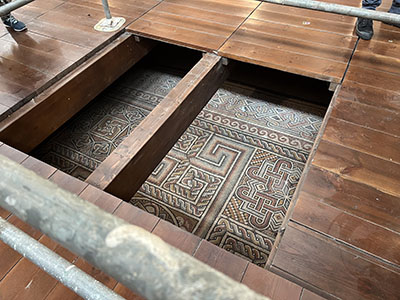
Sections of the original fourth-century mosaic floor, installed during Constantine's church, are preserved beneath removable wooden platforms. These intricate geometric designs offer a rare glimpse into the earliest phase of the Church of the Nativity before Justinian's reconstruction.

Church of the Nativity

The Grotto of the Nativity is a network of interconnected chapels and passageways maintained by the Greek Orthodox, Armenian Apostolic, and Roman Catholic churches. The doorway at the end of the corridor leads toward the cave complex traditionally associated with St. Jerome, where he lived and translated the Latin Vulgate. Lamps, icons, and ancient marble floors reflect nearly seventeen centuries of continuous Christian worship at one of the world’s most sacred sites.

Church of the Nativity

Visitors descend the worn stone staircase leading to the traditional site of Jesus’ birth beneath the Church of the Nativity. During the Christmas season, long lines of pilgrims often wait hours for the opportunity to kneel at this sacred place.

Armenian Chapel

Visitors leaving the Grotto of the Nativity emerge into the Armenian section of the Church of the Nativity. Often referred to as the Armenian Chapel, it is actually part of the Armenian portion of the basilica, one of the sacred spaces shared by the churches that jointly care for this holy site under the historic Status Quo agreement. Its richly ornamented altar and hanging lamps reflect a Christian tradition that has maintained a continuous presence in Bethlehem since the early centuries of the faith.

Church of the Nativity

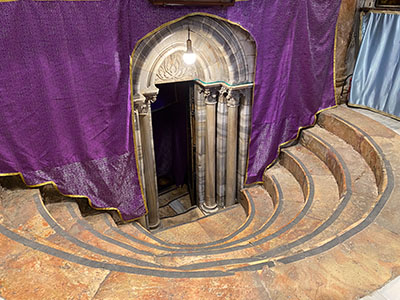
The doorway and ascending stairway exit the Grotto of the Nativity, leading into the Armenian section of the Church. Purple draperies, the liturgical color of Advent and Lent in many Christian traditions, surround the entrance during the Christmas season.
Church of the Nativity

A traditional nativity scene stands in Bethlehem’s Manger Square during the Christmas season, reminding visitors of the humble circumstances surrounding the Savior’s birth. Seasonal displays like this welcome thousands of Christian pilgrims from around the world.

St. Catherine's Church

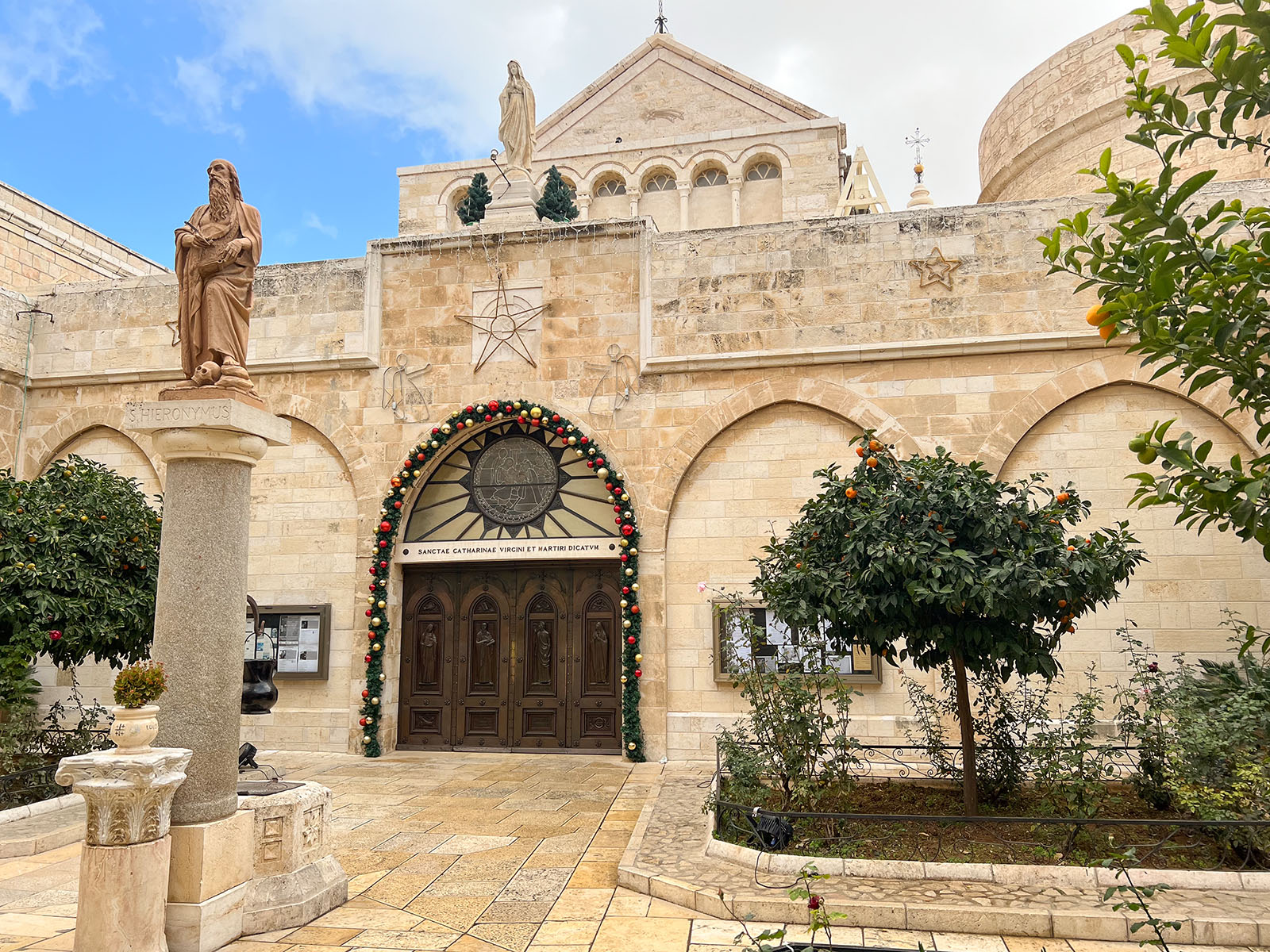
Built alongside the Church of the Nativity, St. Catherine's Church serves as the Roman Catholic parish church of Bethlehem. Originally established by the Franciscans in the late nineteenth century and rebuilt in its present form in 1881, it is the site of the Midnight Mass broadcast around the world each Christmas Eve. Beneath the church are a network of ancient caves associated with St. Jerome, who lived and worked here while translating the Bible into Latin.

St. Catherine's Church

This statue honors St. Jerome (c. AD 347–420), one of Christianity's greatest biblical scholars. Living in the caves beneath St. Catherine's Church for more than thirty years, Jerome translated the Bible from Hebrew and Greek into Latin, producing the Vulgate, the standard Bible of Western Christianity for over a thousand years. His work profoundly influenced biblical scholarship and the transmission of the Scriptures throughout Europe.

St. Catherine's Church

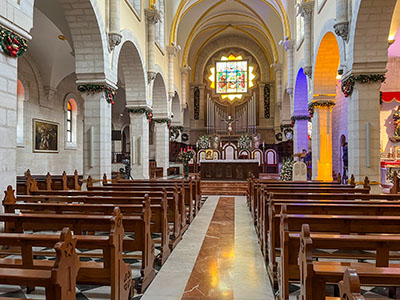
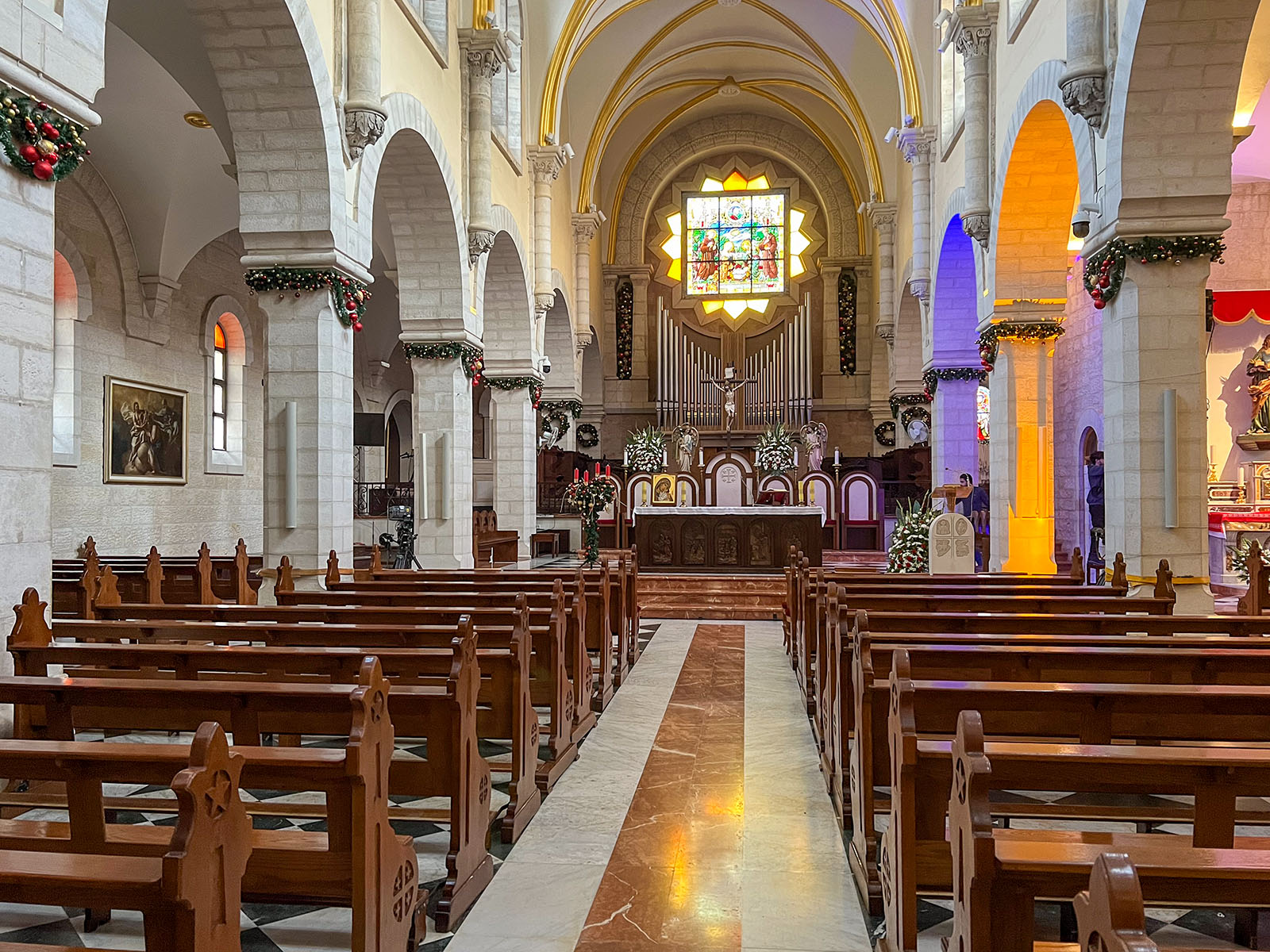
The interior of St. Catherine’s Church reflects the simple elegance of the Franciscan tradition. While less ornate than the neighboring Church of the Nativity, its soaring nave, pointed arches, and stained-glass windows create a bright, reverent setting for worship. From this church, a stairway descends to the ancient caves of St. Jerome and connects directly to the Grotto of the Nativity, linking the Roman Catholic sanctuary with the site traditionally honored as the birthplace of Jesus Christ.

St. Catherine's Church

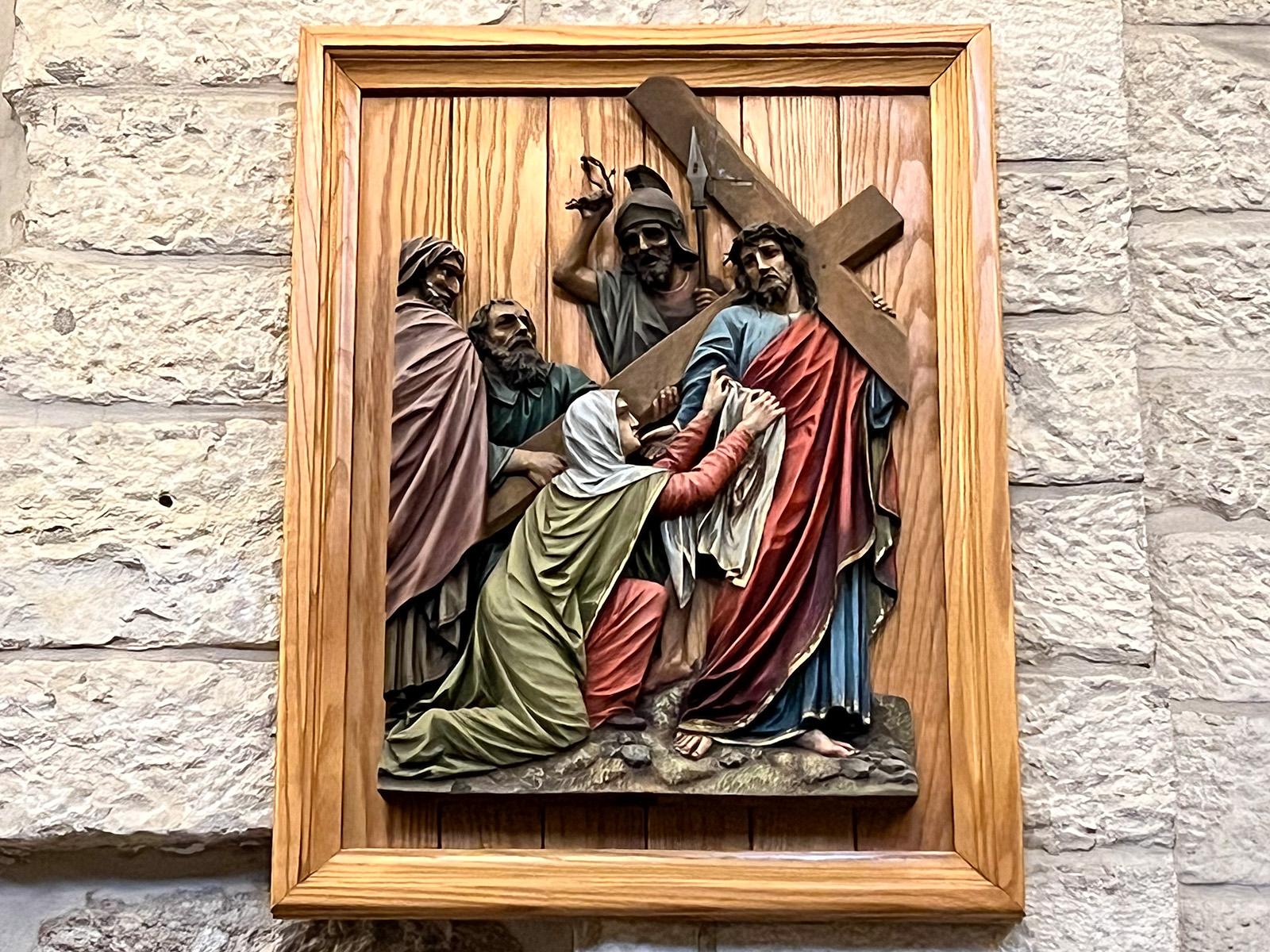
One of the Stations of the Cross lines the stairway leading to the caves beneath the Church of the Nativity. Pilgrims descending to the caves associated with St. Jerome pass these devotional images, reflecting on Christ's journey to Calvary before reaching the place where He entered mortality.

St. Catherine's Church

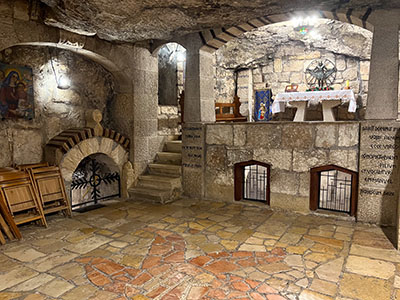
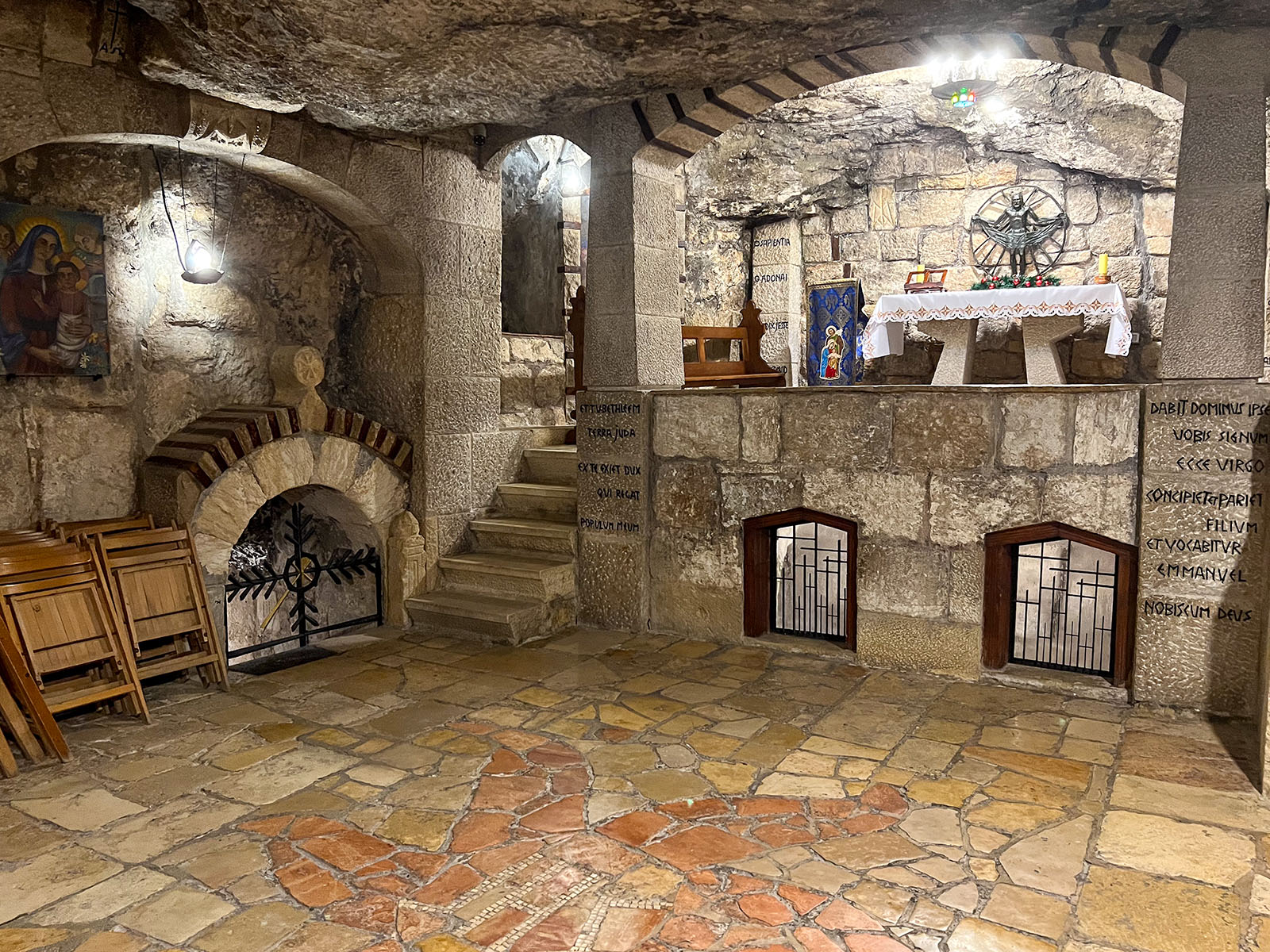
Tradition holds that St. Jerome lived and worked in this cave from about AD 386 until his death in 420. Here he translated the Bible from Hebrew and Greek into Latin, producing the Vulgate, the standard Bible of Western Christianity for more than a thousand years. The simple stone chamber preserves the memory of one of the Church’s greatest biblical scholars.

St. Catherine's Church

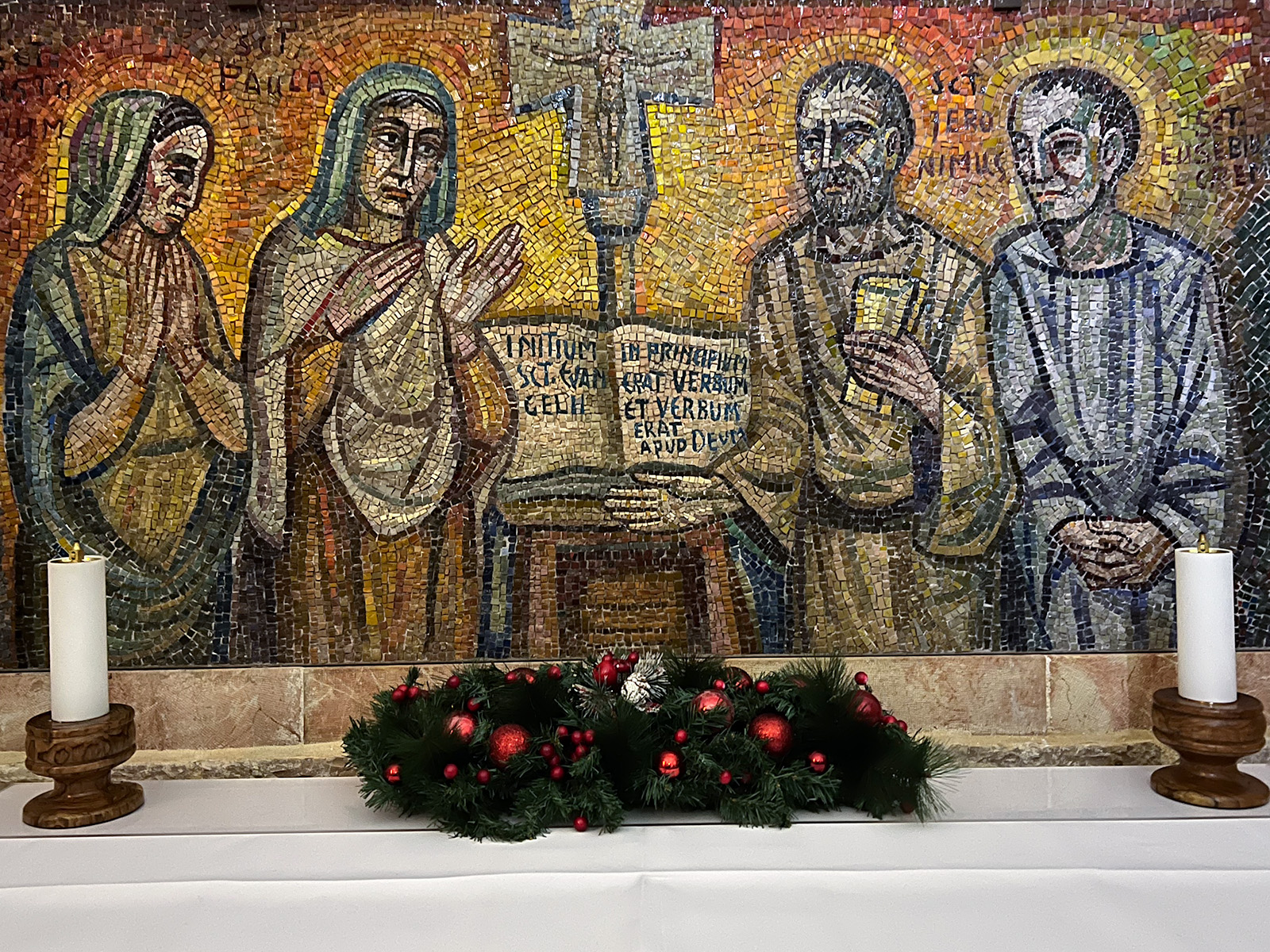
The altar marks the traditional place where St. Jerome celebrated worship and devoted himself to the study and translation of Scripture. The modern mosaic behind the altar depicts St. Paula, St. Jerome, the Cross, St. Eustochium, and St. Eusebius of Cremona, companions who helped establish the monastic community at Bethlehem. Together they remind visitors that Jerome’s work was not a solitary effort but part of a vibrant Christian community dedicated to preserving and teaching God’s word.

Shepherds' Field

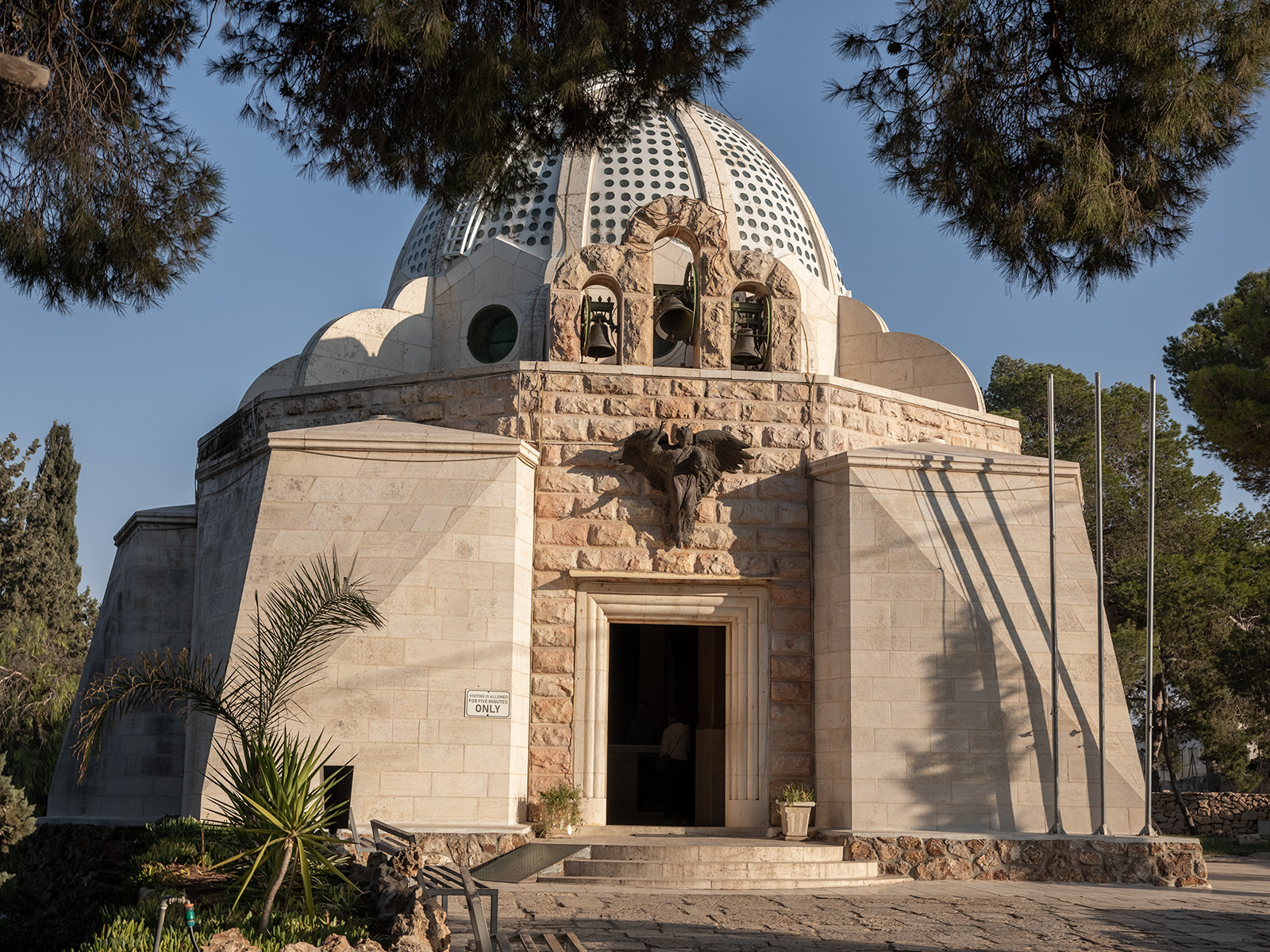
The modern Franciscan chapel at Shepherds’ Field commemorates the angelic announcement of Christ’s birth to the shepherds. Designed in the shape of a shepherd’s tent, it was completed in 1954 over the remains of earlier Byzantine monasteries and churches.

Shepherds' Field

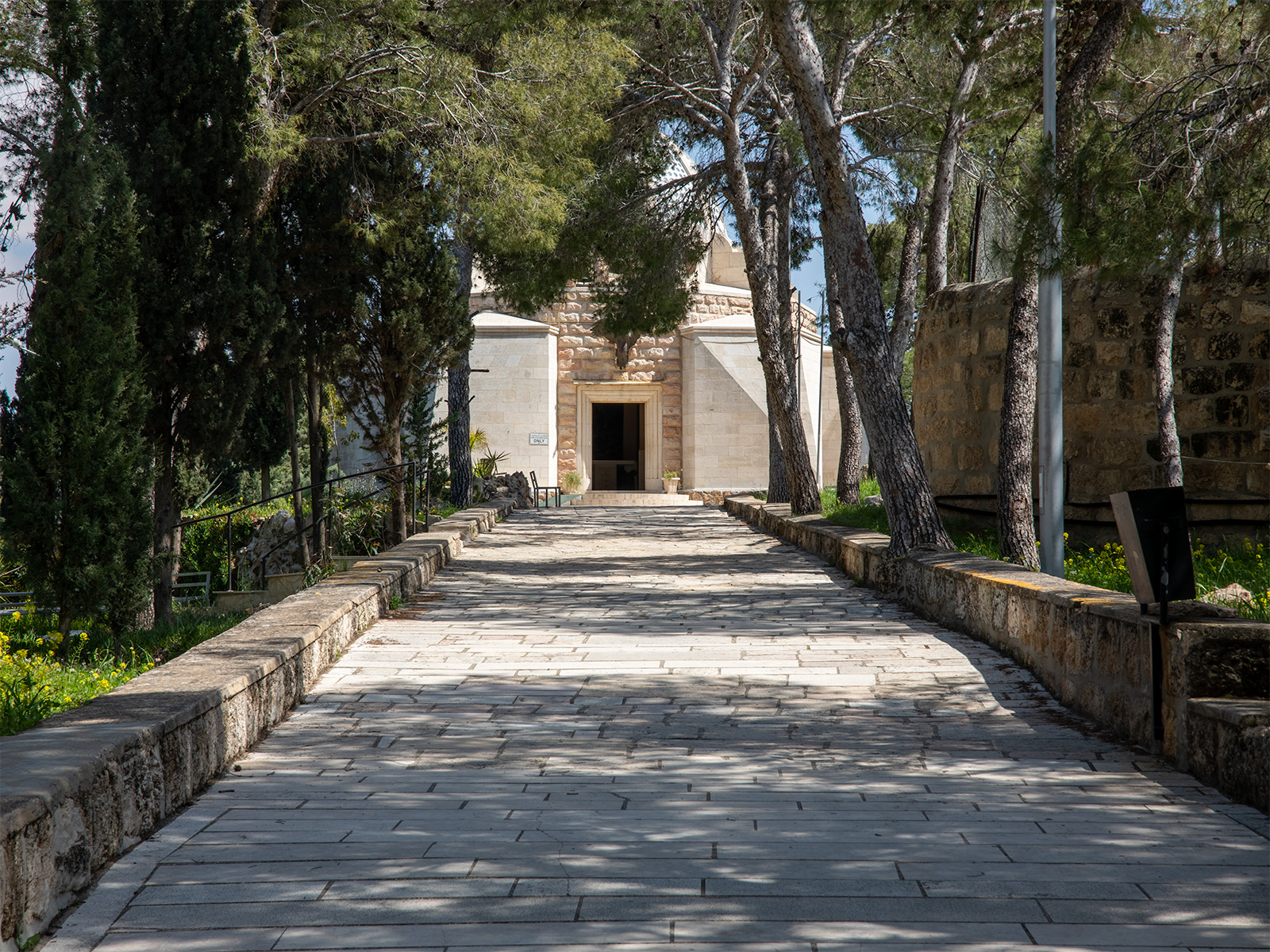
A tree-lined walkway leads visitors through the peaceful grounds of Shepherds’ Field. The quiet setting offers a welcome contrast to nearby Bethlehem and invites reflection on the humble circumstances surrounding the Savior's birth.

Shepherds' Field

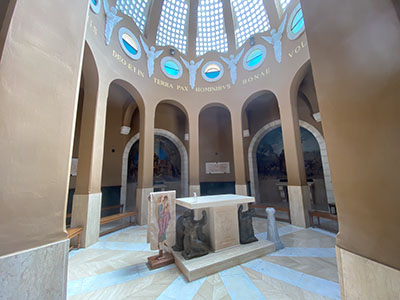
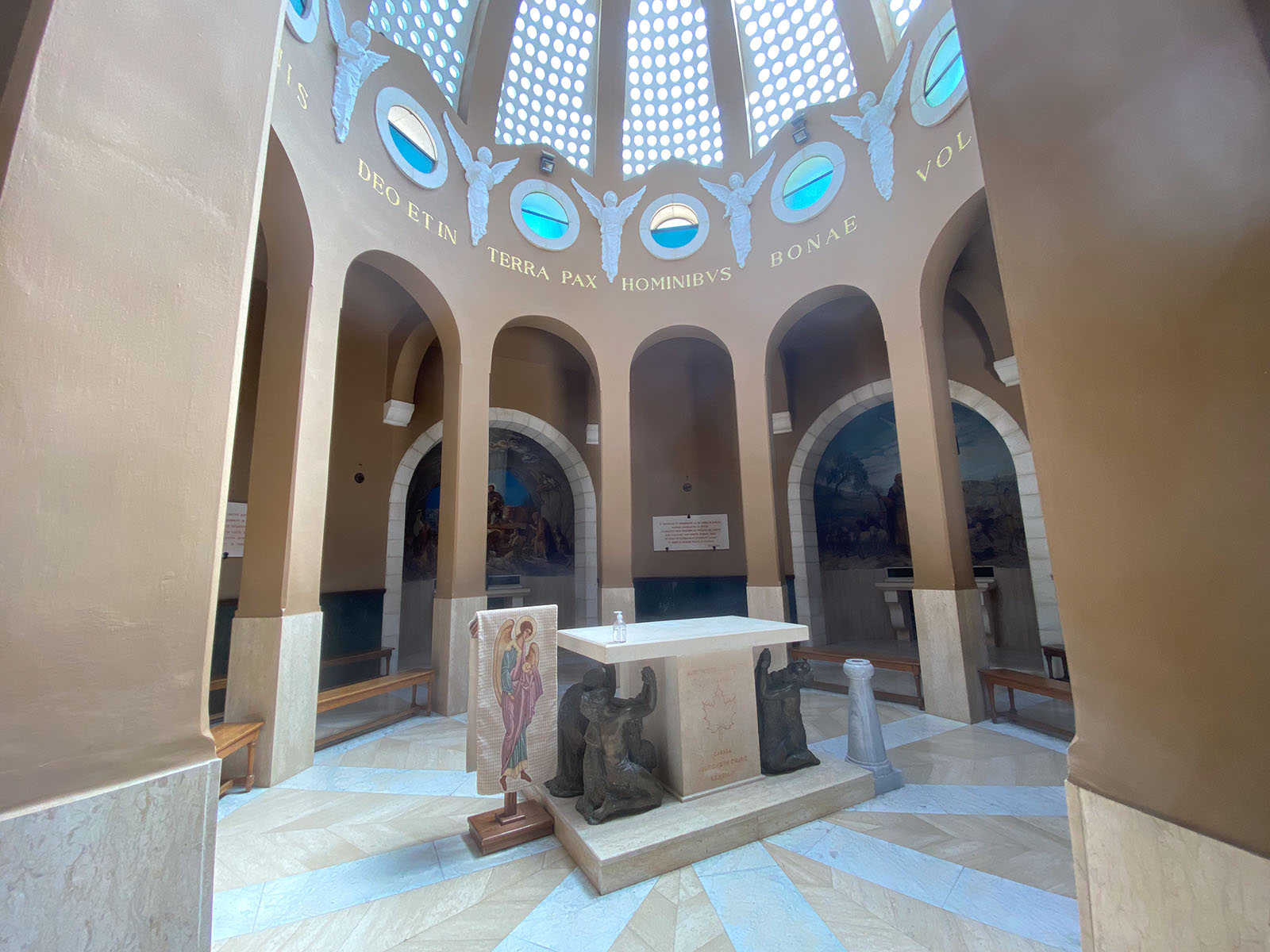
The circular interior of the Shepherds' Field chapel draws the eye upward toward the skylight, symbolizing the heavens opened by the angel's proclamation: “Glory to God in the highest, and on earth peace.”

Shepherds' Field

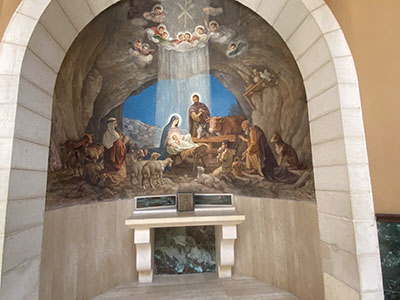
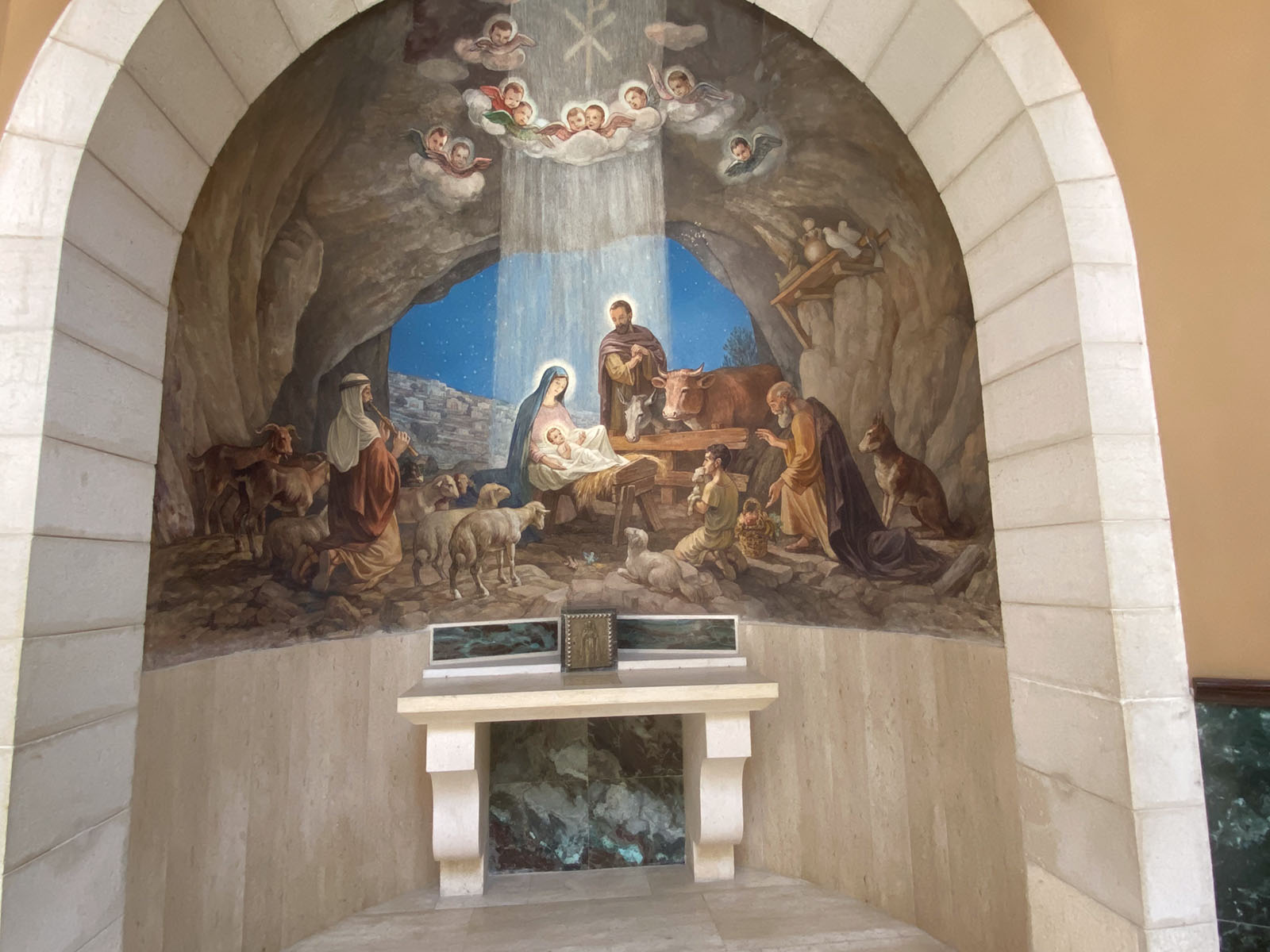
This mural depicts the birth of Jesus in Bethlehem. Shepherds were among the first to worship the newborn Messiah, emphasizing that the good news of Christ’s birth was first announced to ordinary people watching their flocks by night.

Shepherds' Field

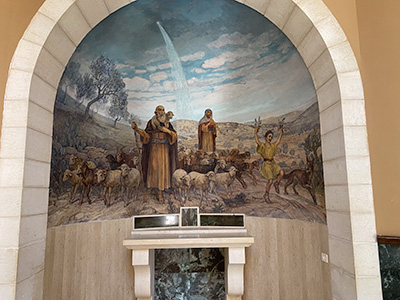
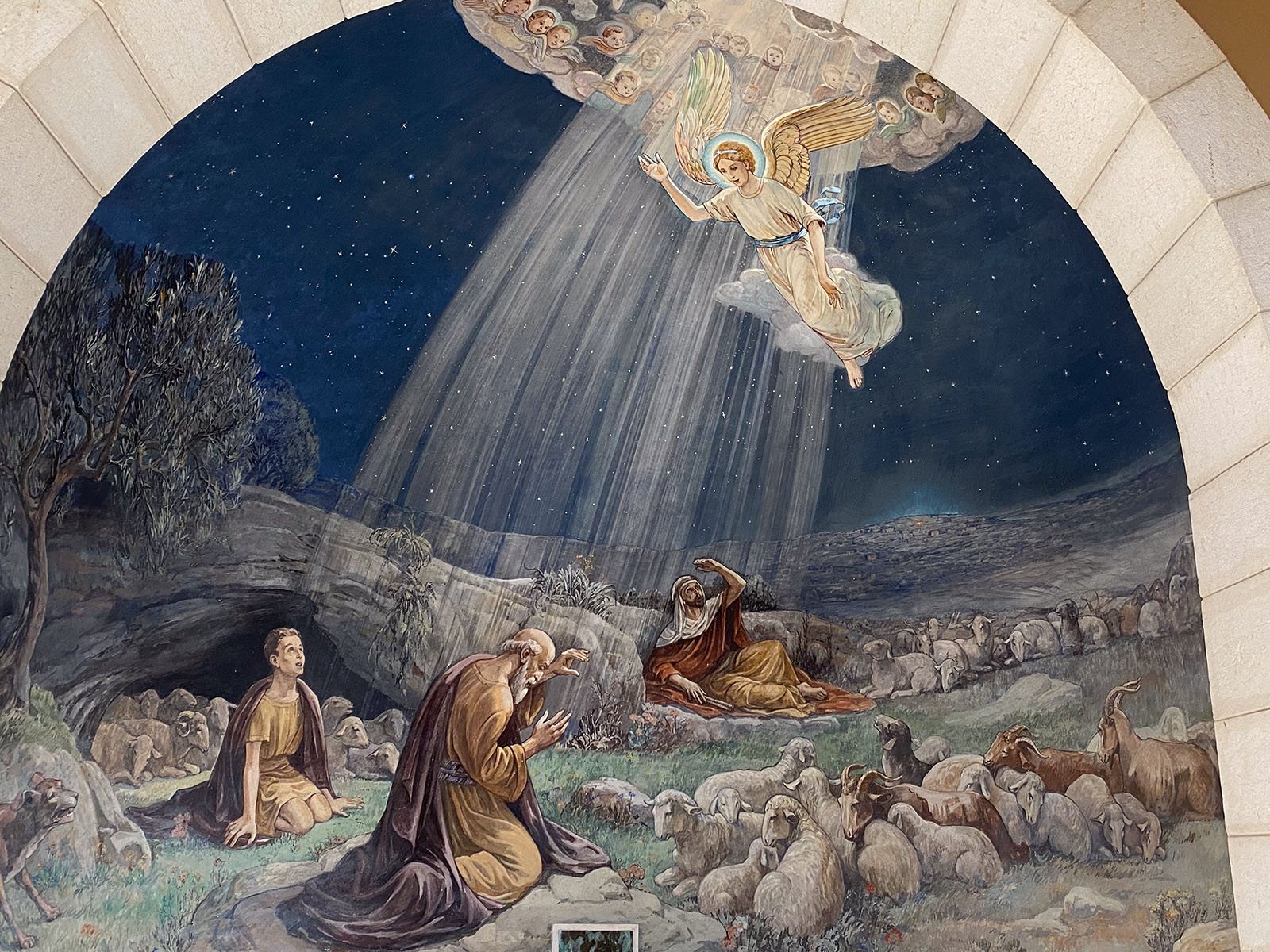
The central mural portrays the angel announcing Christ’s birth to the shepherds, followed by the heavenly host praising God. The dramatic beams of light reflect the glory described in Luke 2:9–14.

Shepherds' Field

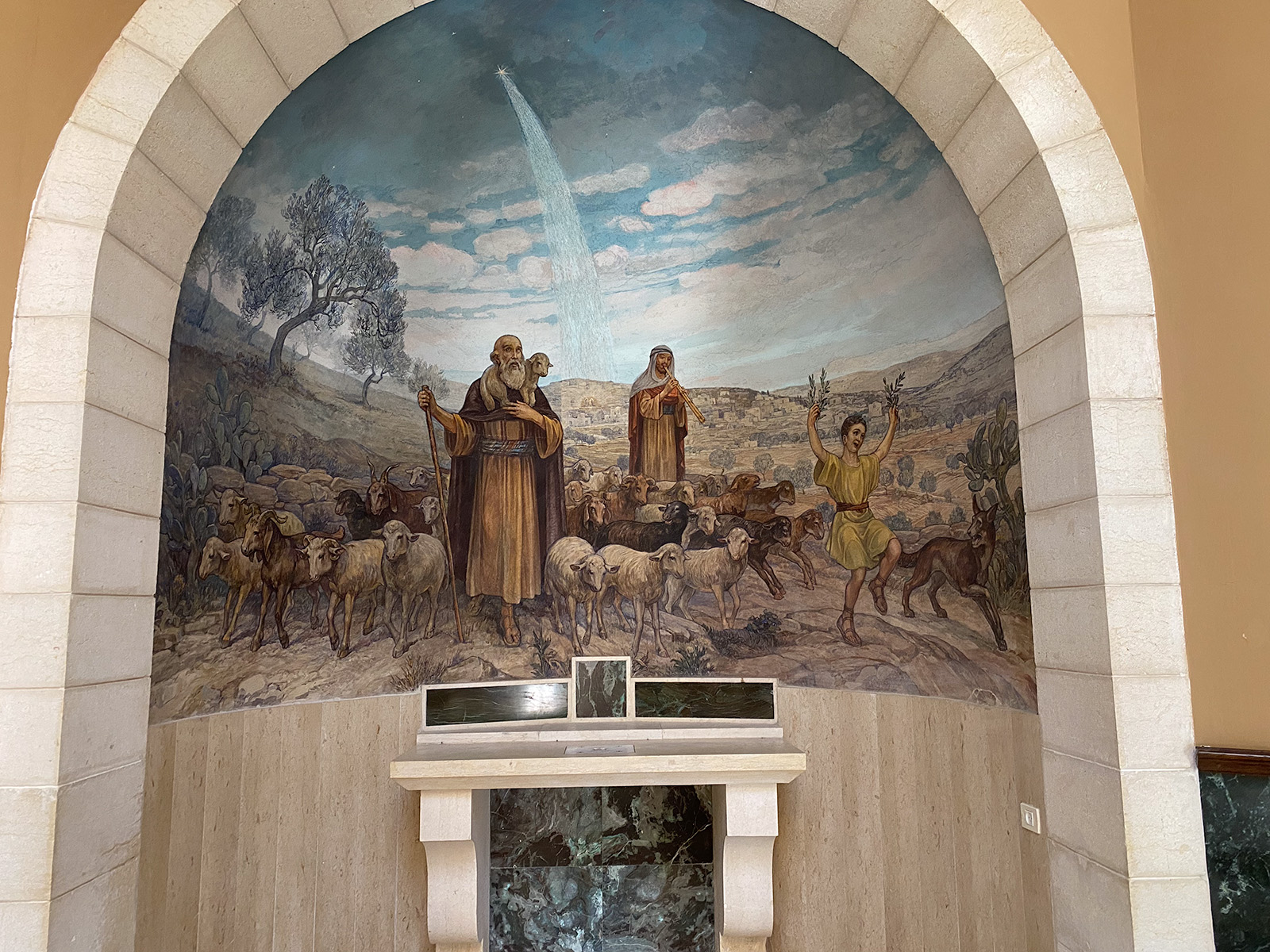
After hearing the angel’s message, the shepherds hurried to Bethlehem to find Mary, Joseph, and the infant Jesus. Their immediate response has long been seen as an example of humble faith and obedience.

Shepherds' Field

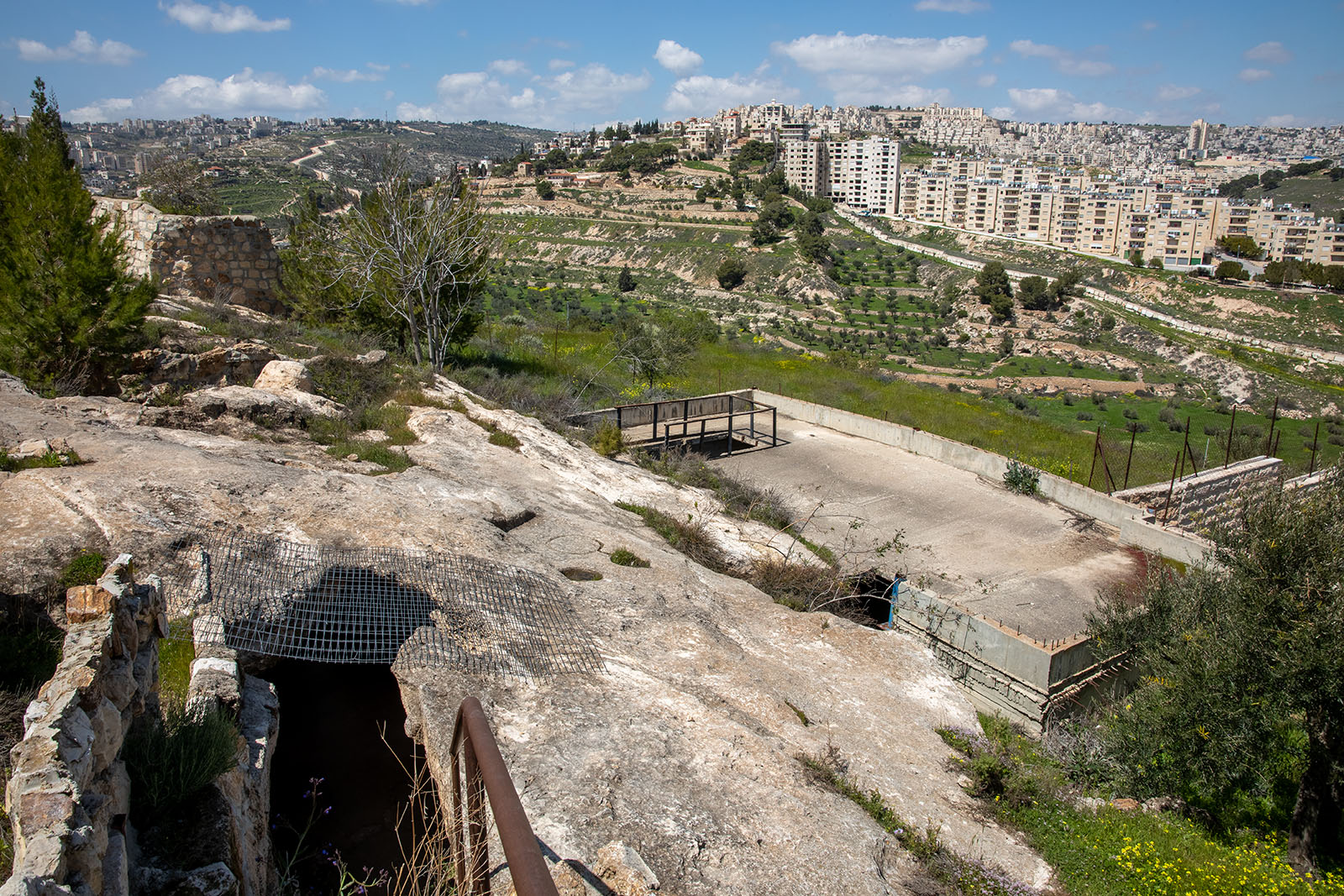
From Shepherds’ Field, Bethlehem rises on the ridge above the surrounding valleys. This landscape has changed over the centuries, but it still conveys the close relationship between the shepherds’ fields and the town where Jesus was born.

Shepherds' Field

Terraced hills and olive groves surround Bethlehem much as they have for centuries. The region's rocky slopes provided pastureland for sheep and shaped the agricultural life of those who lived here.

Shepherds' Field

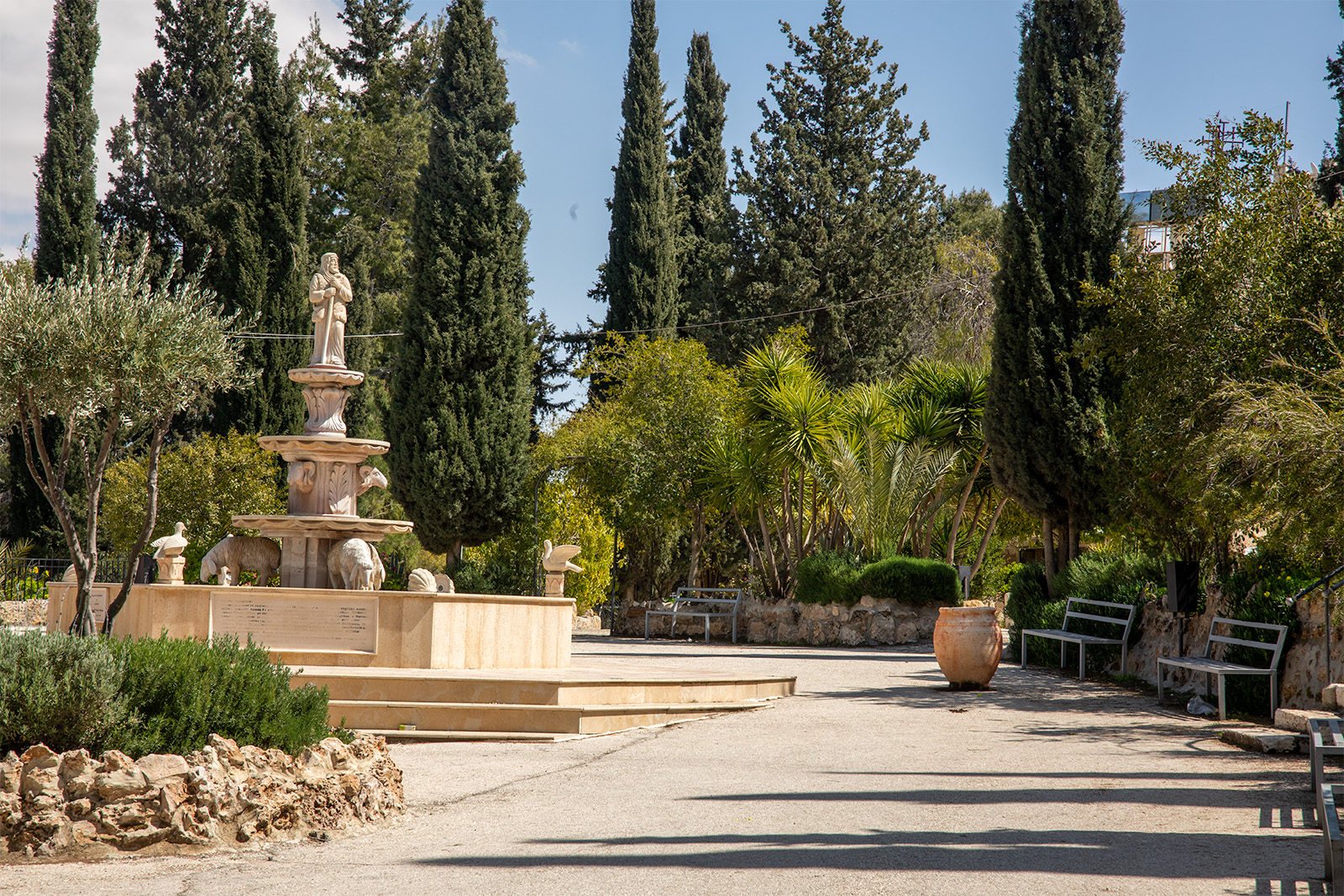
On the grounds below the Shepherds’ Field chapel, a fountain is crowned by a statue of a shepherd holding a staff, surrounded by sheep. Set among cypress, olive, and palm trees, the peaceful garden reflects the pastoral landscape that has long been associated with Bethlehem and the shepherds who first heard the angels’ announcement of Christ’s birth.

Shepherds' Field

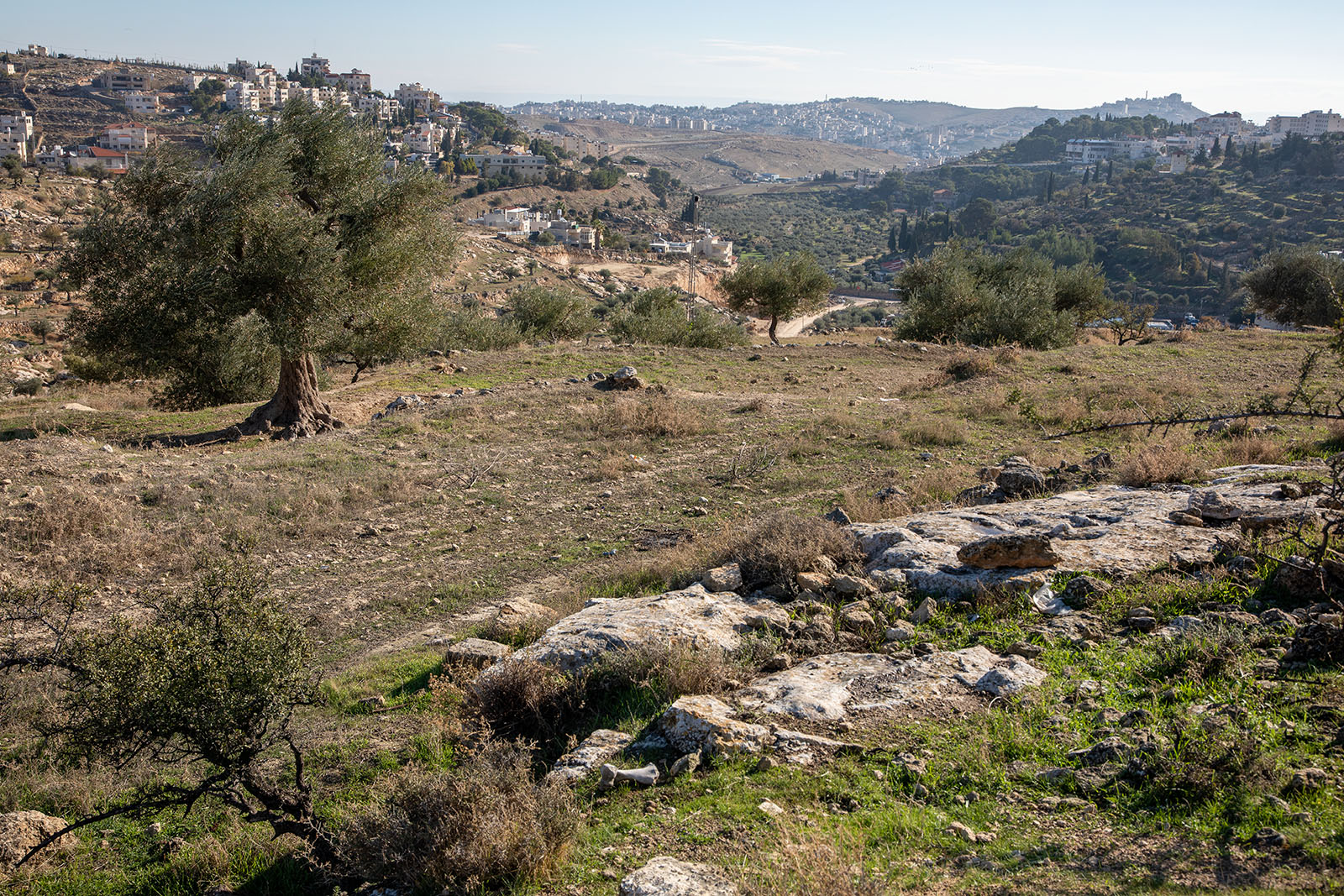
The rolling hills below Bethlehem preserve much of the character of the biblical landscape. Shepherds would have moved their flocks across these slopes in search of seasonal grazing.

Shepherds' Field

Inside the traditional shepherds’ cave, visitors gain a sense of the simple shelters that were common throughout the Judean hill country. Such caves provided protection from the elements and remain a vivid reminder of the humble setting of the Christmas story.

Shepherds' Field

Olive trees, stone terraces, and open pasture combine to create a landscape that closely resembles the countryside described in Luke's Gospel. It is easy to imagine shepherds watching their flocks in these quiet hills.

Shepherds' Field

Olive trees have flourished around Bethlehem for centuries. Although this tree is not old enough to date from the time of Christ, it reflects the enduring agricultural heritage of the Judean hill country.

Shepherds' Field

A solitary olive tree stands among the rocky hills below Bethlehem. Olive trees have long been a defining feature of the Judean landscape, symbolizing peace, endurance, and fruitfulness. Their twisted trunks and remarkable longevity remind visitors that this land has sustained generations of those who have lived and worshipped here.

Shepherds' Field

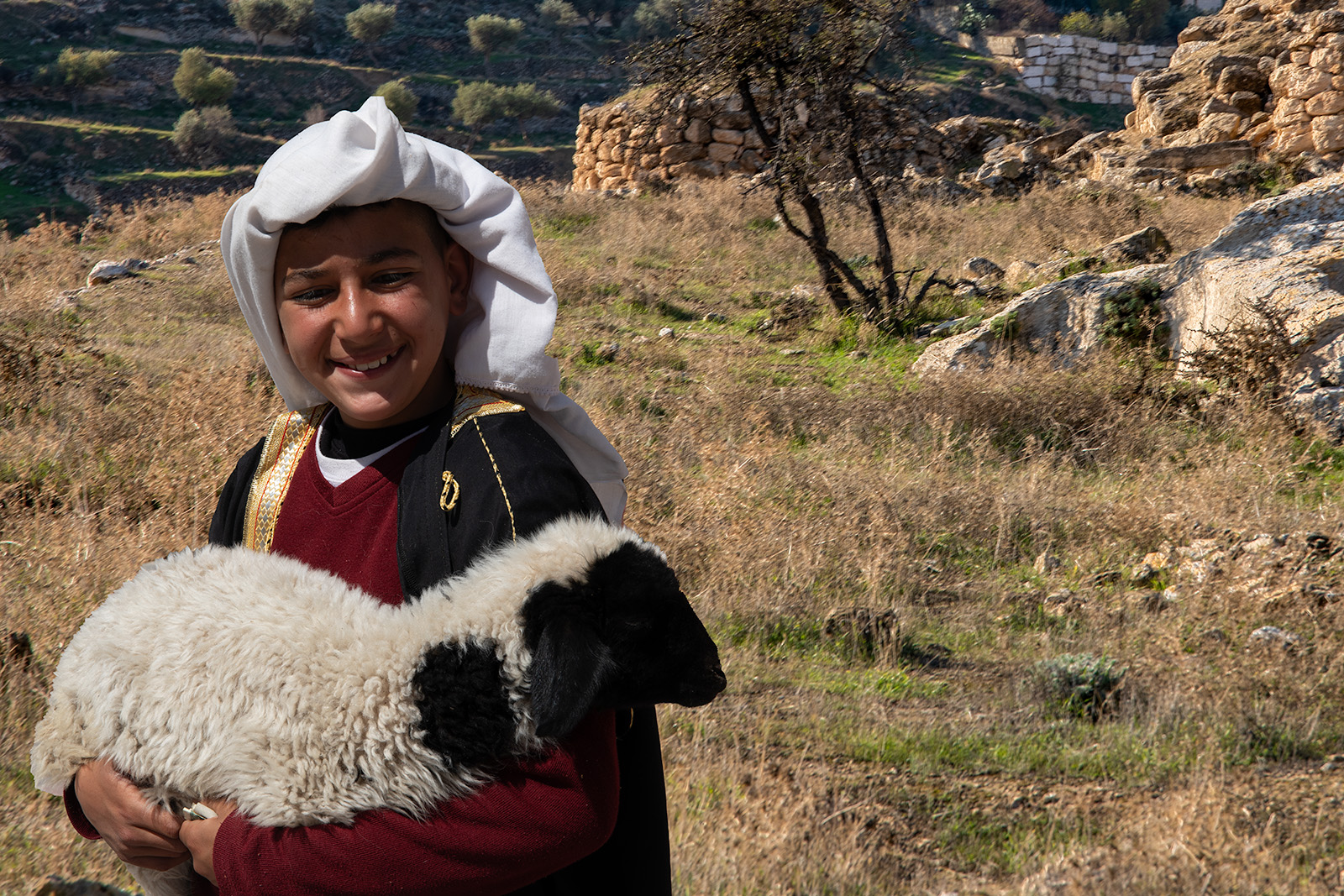
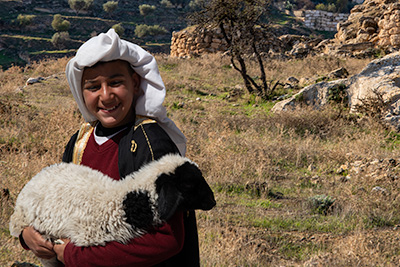
Local shepherding remains part of life around Bethlehem today. While modern shepherds use contemporary methods, scenes like this provide a living connection to the pastoral world in which the angels first announced the birth of Jesus.

Major Events at Bethlehem

Bethlehem - Beggar Woman

On a cold, rainy day not far from the Church of the Nativity, this woman quietly sought help from passing pilgrims. Bethlehem has changed dramatically over two thousand years. Yet, scenes of poverty and humble circumstances still remind visitors that the Savior entered the world among the lowly rather than the powerful.