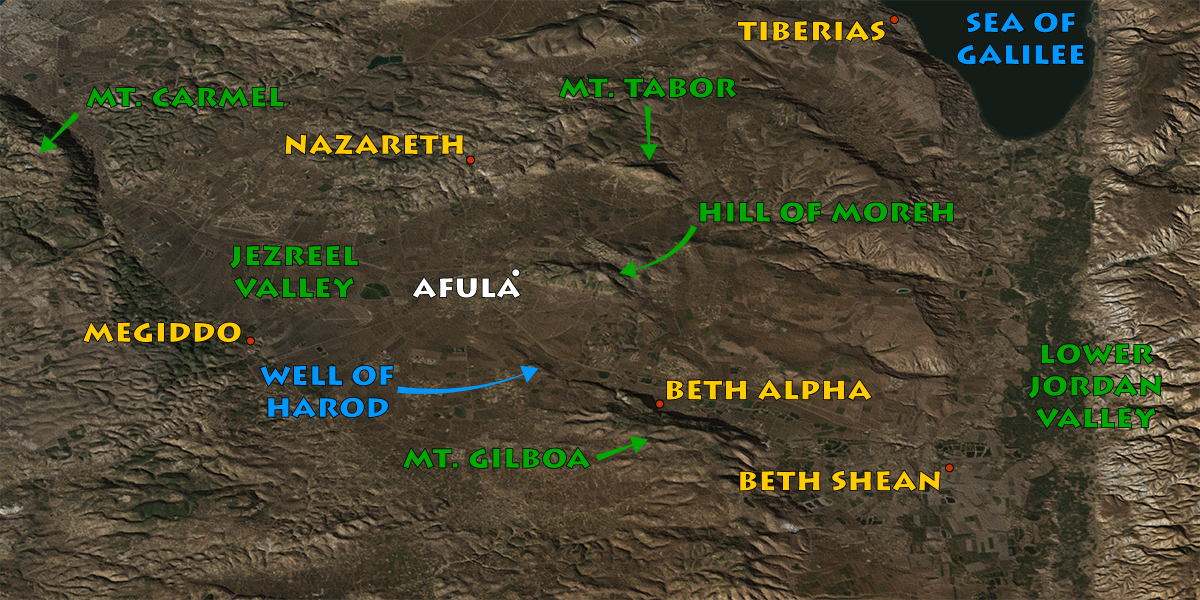
Beth Alpha Synagogue
Click the title to view map
Site Overview
- Region: Jezreel Valley
- Biblical Territory: Issachar, Zebulun, and Manasseh
- Modern Site: Beth Alpha Synagogue National Park
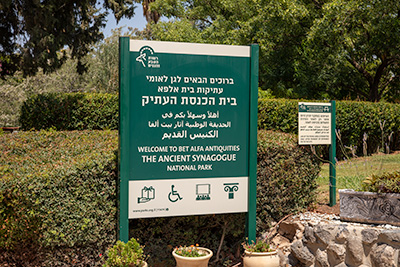
- Name: Beth Alpha (also spelled Beit Alfa) was the name of an ancient village that stood on this site during the Roman and Byzantine periods. The national park and nearby kibbutz preserve the ancient name.
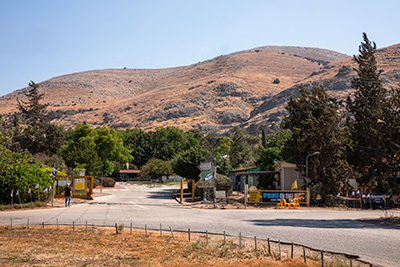
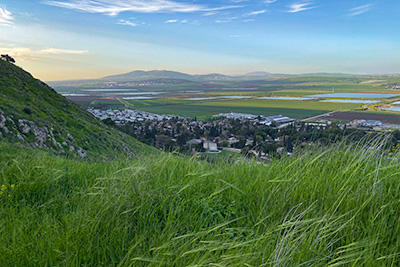
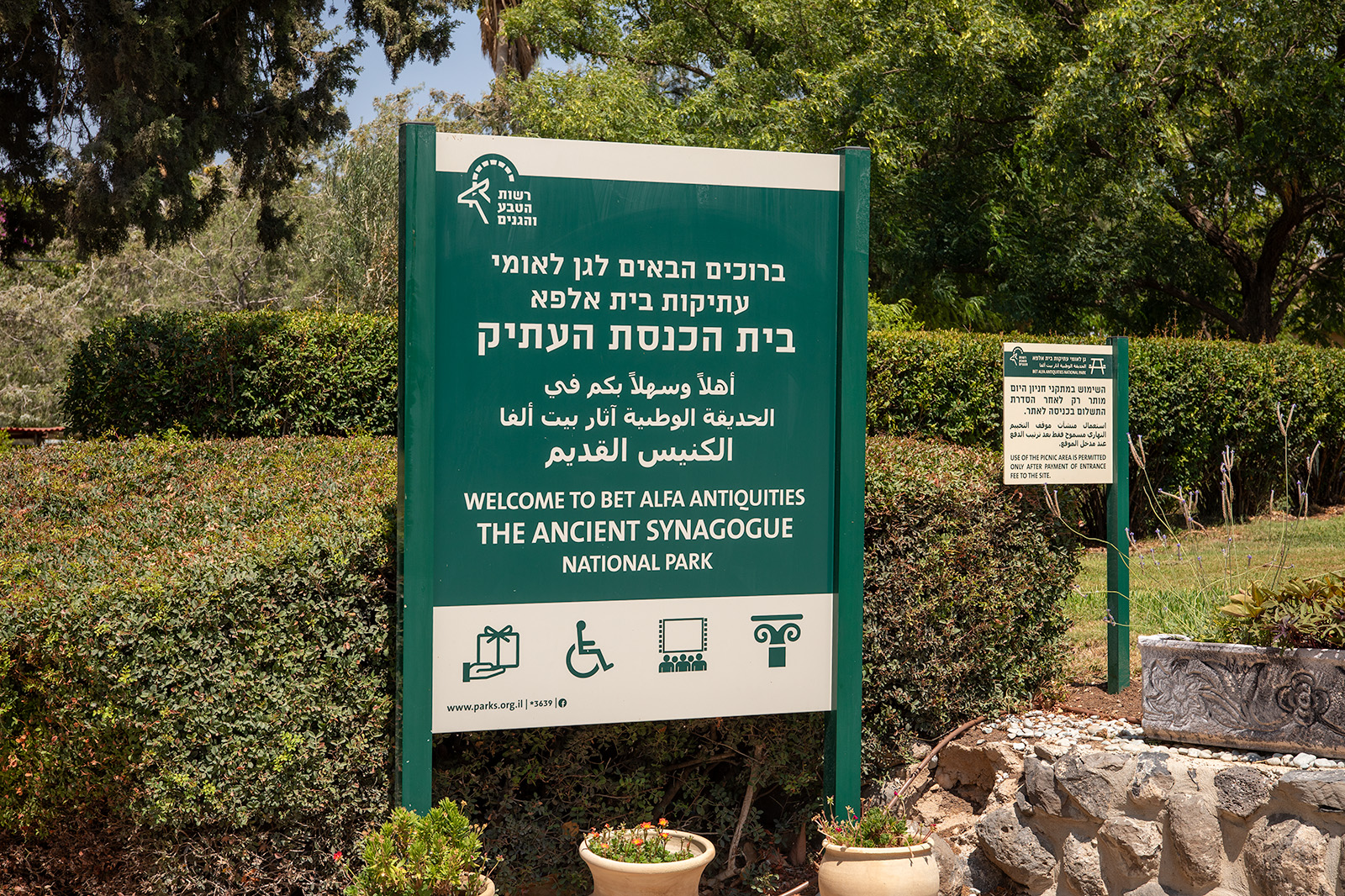
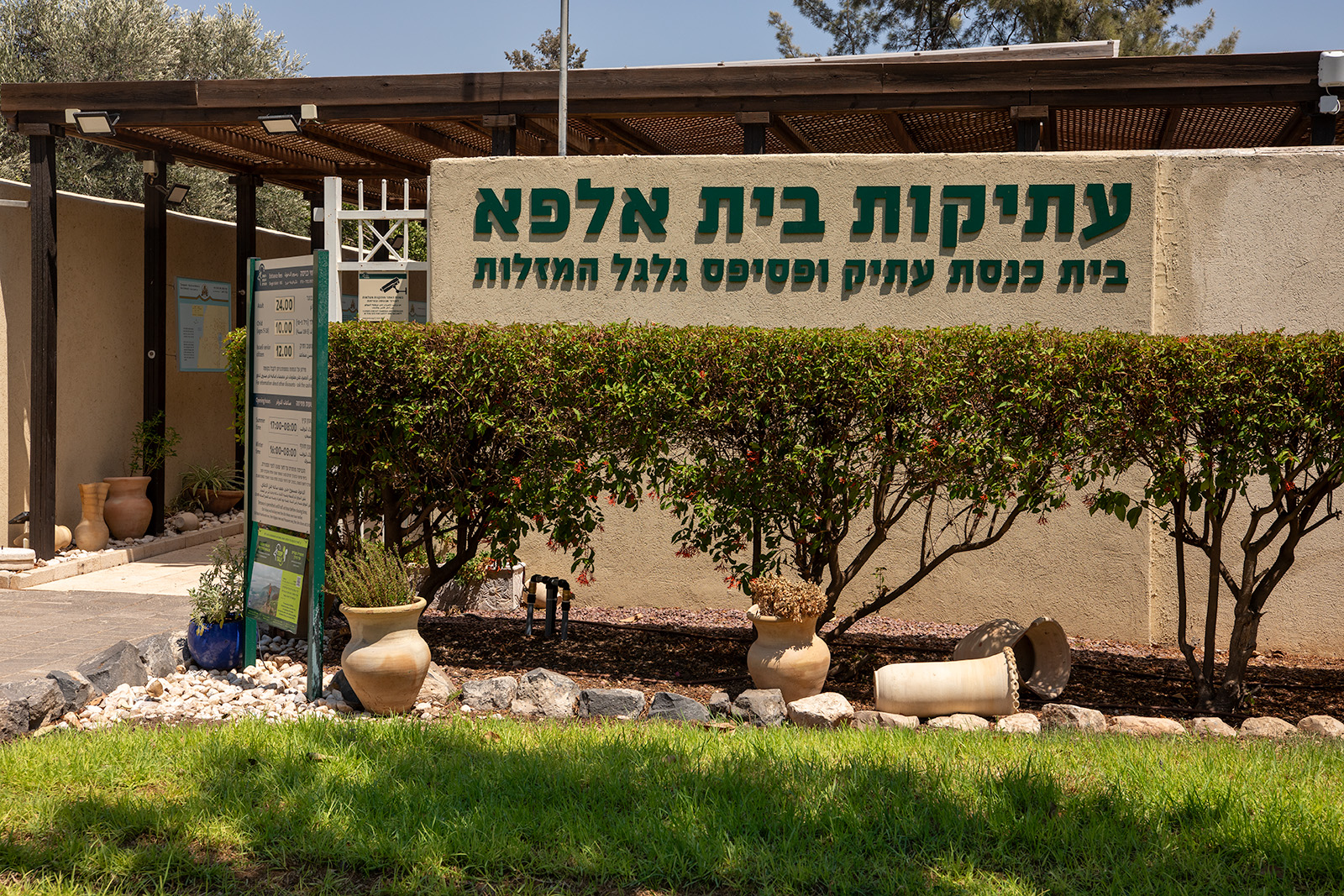
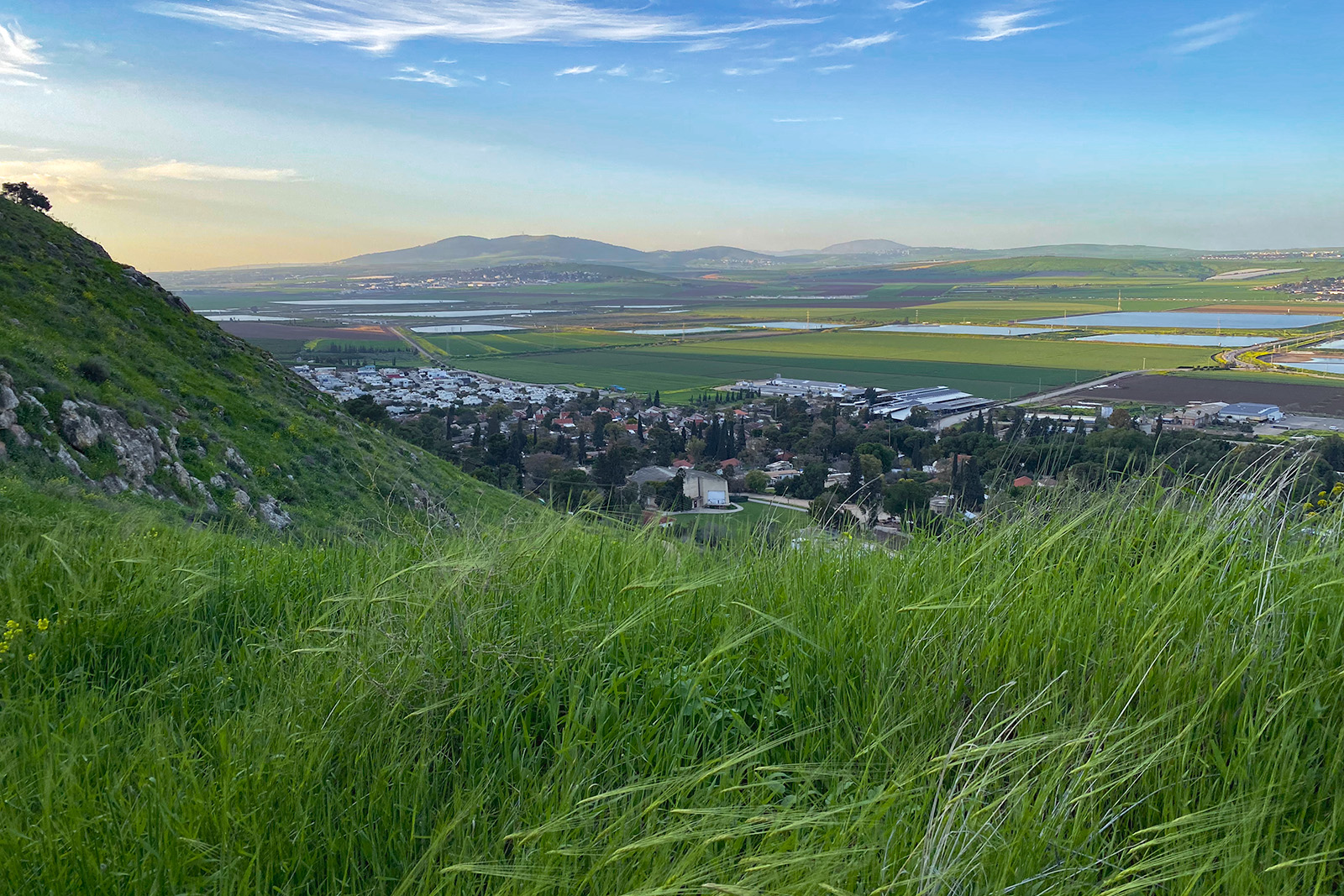
My first encounter with Beth Alpha occurred quite by accident. I was hiking Mt. Gilboa from east to west, starting at a point west of Beth Shean in the Jordan Valley, when, as the day wore on and it was getting late, I realized that I didn’t have a plan for returning to Haifa. I pulled out Google Earth to examine my options. Beth Alpha was the closest town with a bus stop. At the time, I was on the north side of Mt. Gilboa and had to scramble over the mountain before I could start my descent to the town. I took the green landscape photo shown below while following a trail through one of the ravines above Beth Alpha, which came into view just before I reached the bottom. Walking to the bus stop through town, I passed close to the synagogue, not knowing it was even there. I recently returned to Beth Alpha (July 2025) to see the synagogue, which I had since learned about (see the photos below).
Synagogue History
Beth Alpha is one of the best-preserved ancient synagogues in Israel and is especially famous for its colorful mosaic floor. Created during the Byzantine period, the floor combines biblical scenes, Jewish religious symbols, and a zodiac cycle in a way that has fascinated archaeologists and historians for nearly a century. The mosaics provide valuable insights into Jewish worship, art, and religious life during the centuries following the destruction of the Second Temple, also known as Herod’s Temple.
Before the destruction of the Second Temple, synagogues functioned much like modern town halls. Local people congregated in the synagogue to listen to and discuss both religious and community affairs. This is the setting in which we find Jesus throughout the New Testament whenever He teaches in a synagogue.
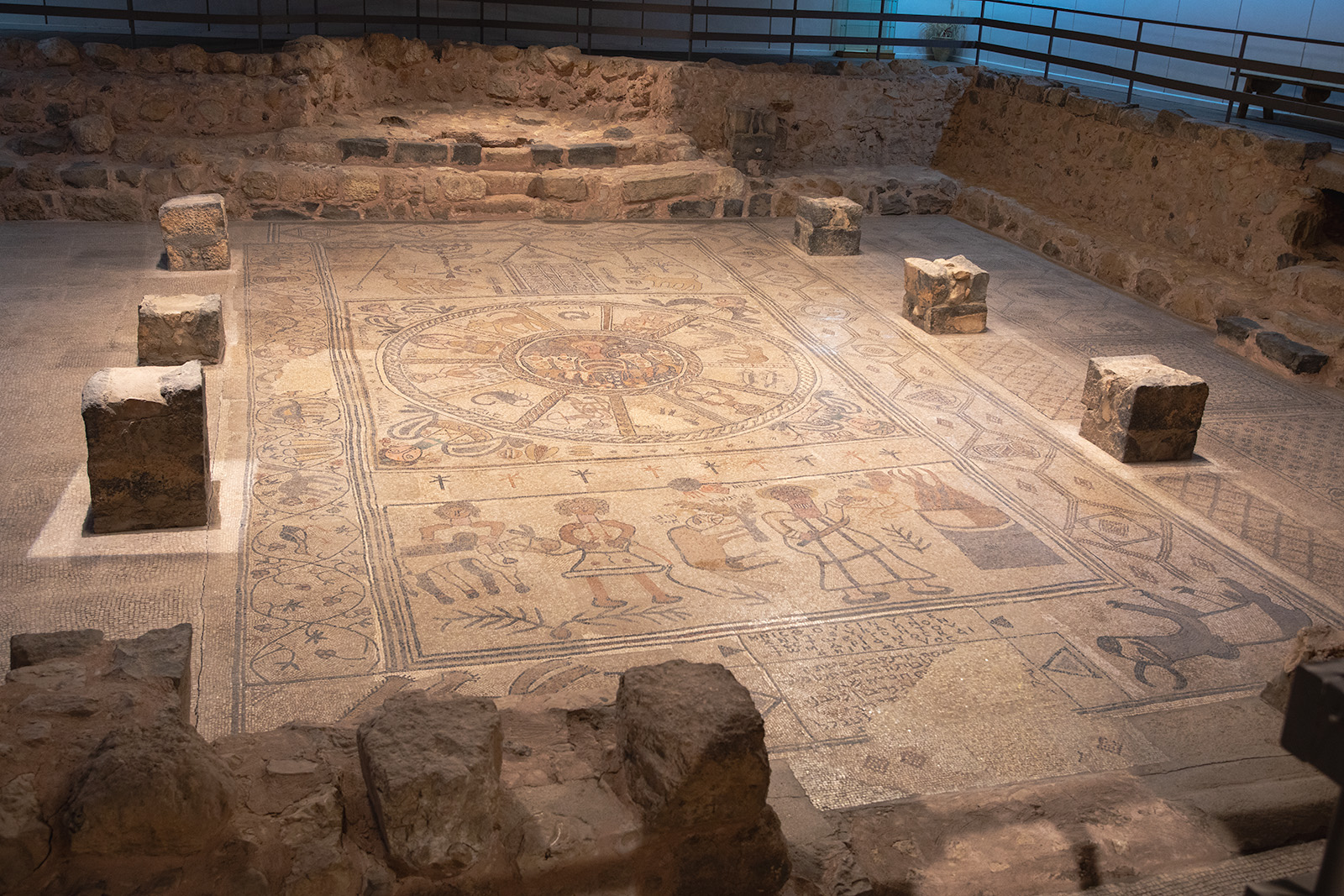
An explanation of the beautiful four-panel mosaic floor of the Beth Alpha synagogue appears with each of the next four photos (below). Clicking the images brings up an even larger version of each. The panels are described in the order encountered when entering the synagogue. It, like other fifth-century Byzantine period structures, contains a courtyard (atrium), an anteroom (narthex), a main hall, an apse at the end of the main hall, and two aisles with pillars that supported the roof. Excavators found the remains of a tiled roof in the main hall.
For more on synagogues before and after the destruction of the Second Temple, see “Ancient Synagogues,” in Walking the Way of Christ: Blessed Pilgrimage, Vol. 1.
Panel Explanations
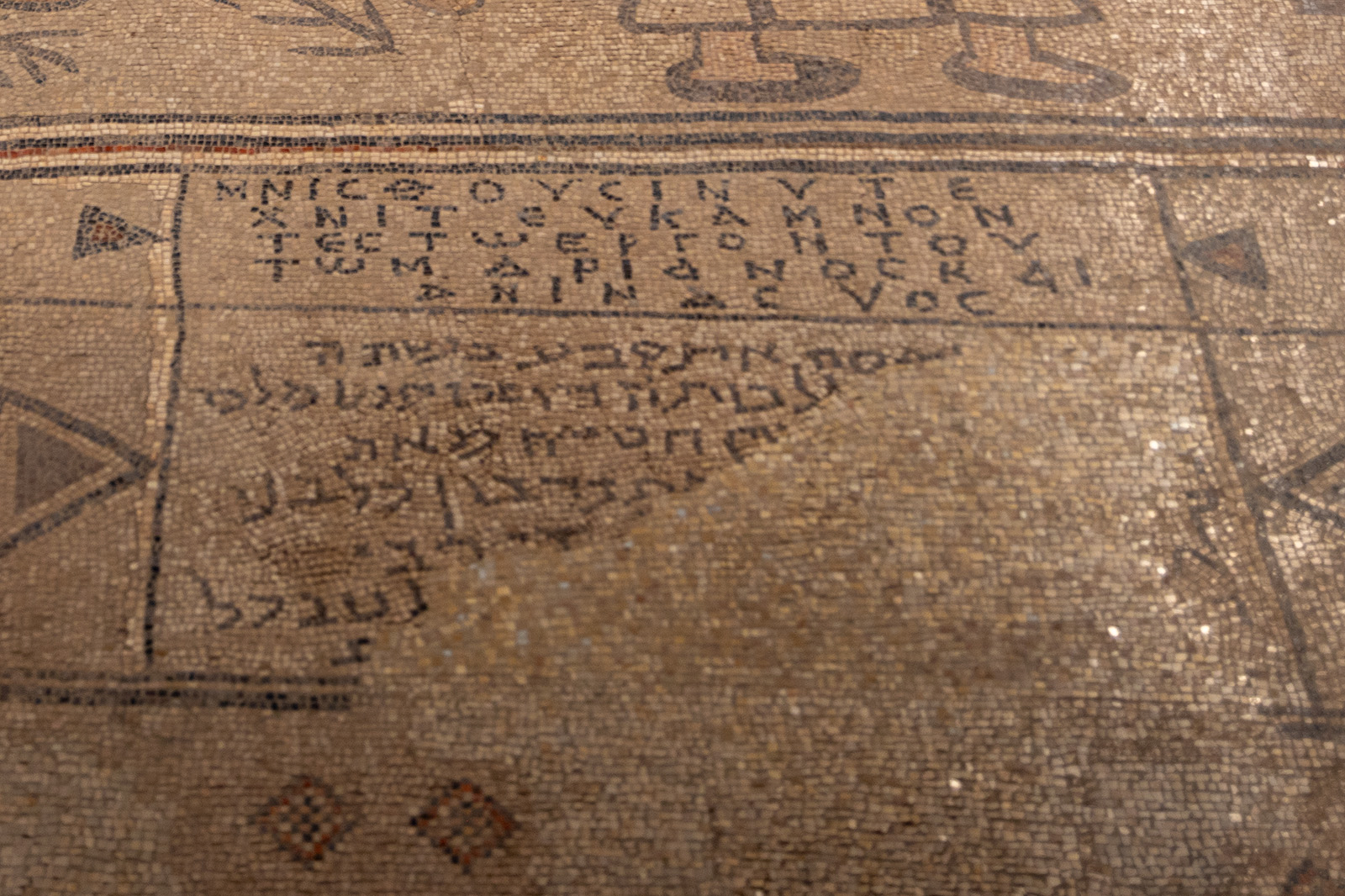
Panel 1—Dedication Inscriptions. The first panel at the entrance to the synagogue contains two inscriptions, flanked by a lion and a bull (see the main photo above). The partly destroyed Aramaic inscription reads, “This mosaic was laid in the year of the reign … of Justin the emperor for the sale sum of one hundred measures of wheat … that were donated by the people of the village.” The Greek inscription above it reads, “May the craftsmen who carved out this work, Marianos and his son Hanina, be held in remembrance.” Their names also appear in the synagogue of Beth Shean, where the two men probably had their shop.
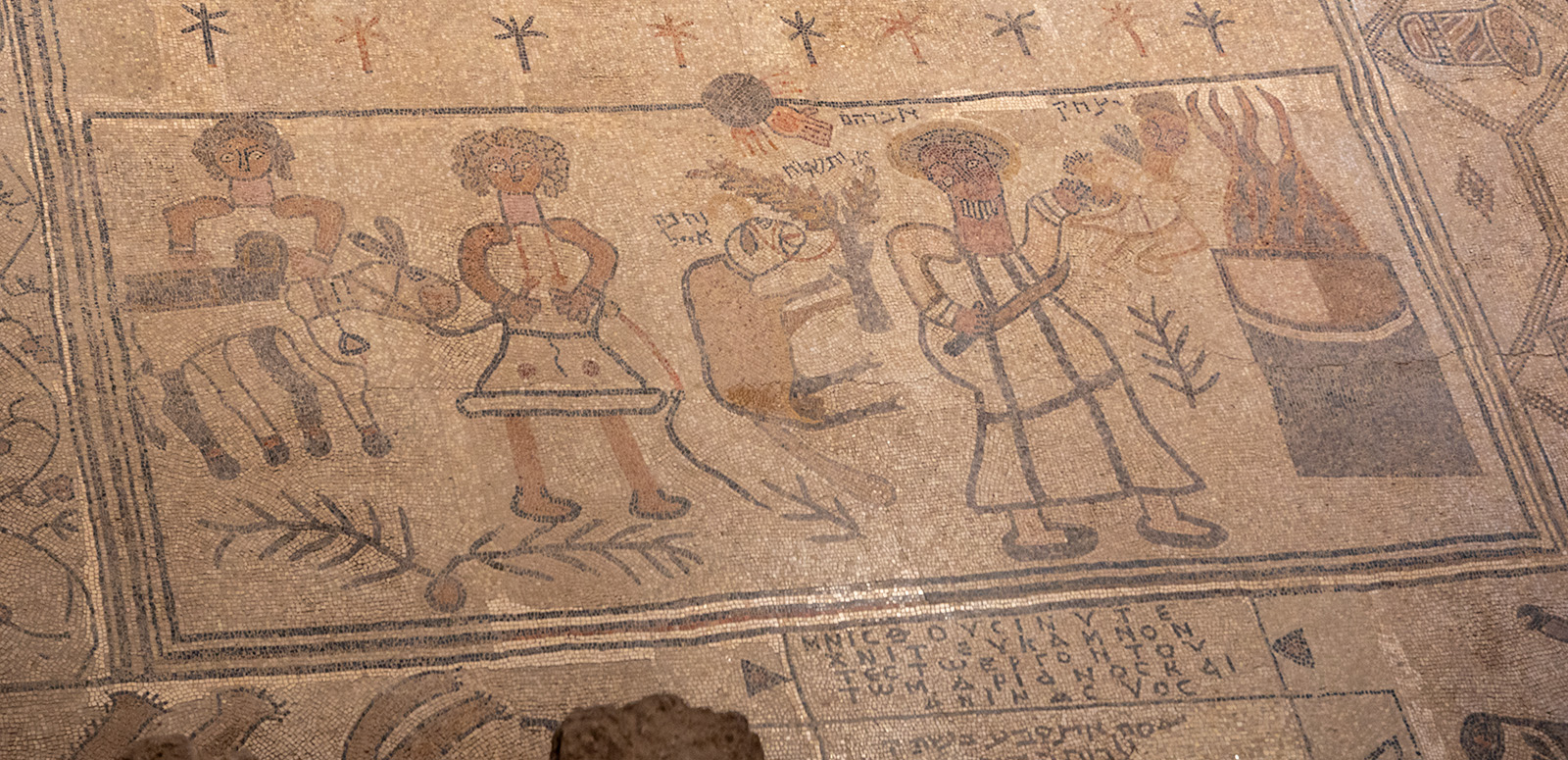
The Book of Mormon passage (Jacob 4:5) provides a fascinating insight. The prophet Jacob compared Abraham sacrificing Isaac to God the Father sacrificing His Only Begotten Son, even Jesus Christ. With this thought in mind, consider what President Eyring said on his social media account this week (July 30, 2025): “The loving God who allowed these tests [i.e., the challenges of mortality] . . . also designed a sure way to pass through them. Heavenly Father so loved the world that He sent His Beloved Son to help us. His Son, Jesus Christ, gave His life for us. Jesus Christ bore in Gethsemane and on the cross the weight of all our sins. He experienced all the sorrows, the pains, and the effects of our sins so that He could comfort and strengthen us through every test in life” (emphasis added). Jacob’s insight reminds us that Isaac’s near sacrifice pointed forward to the willing sacrifice of Jesus Christ, through whom God provided the sure way of redemption.
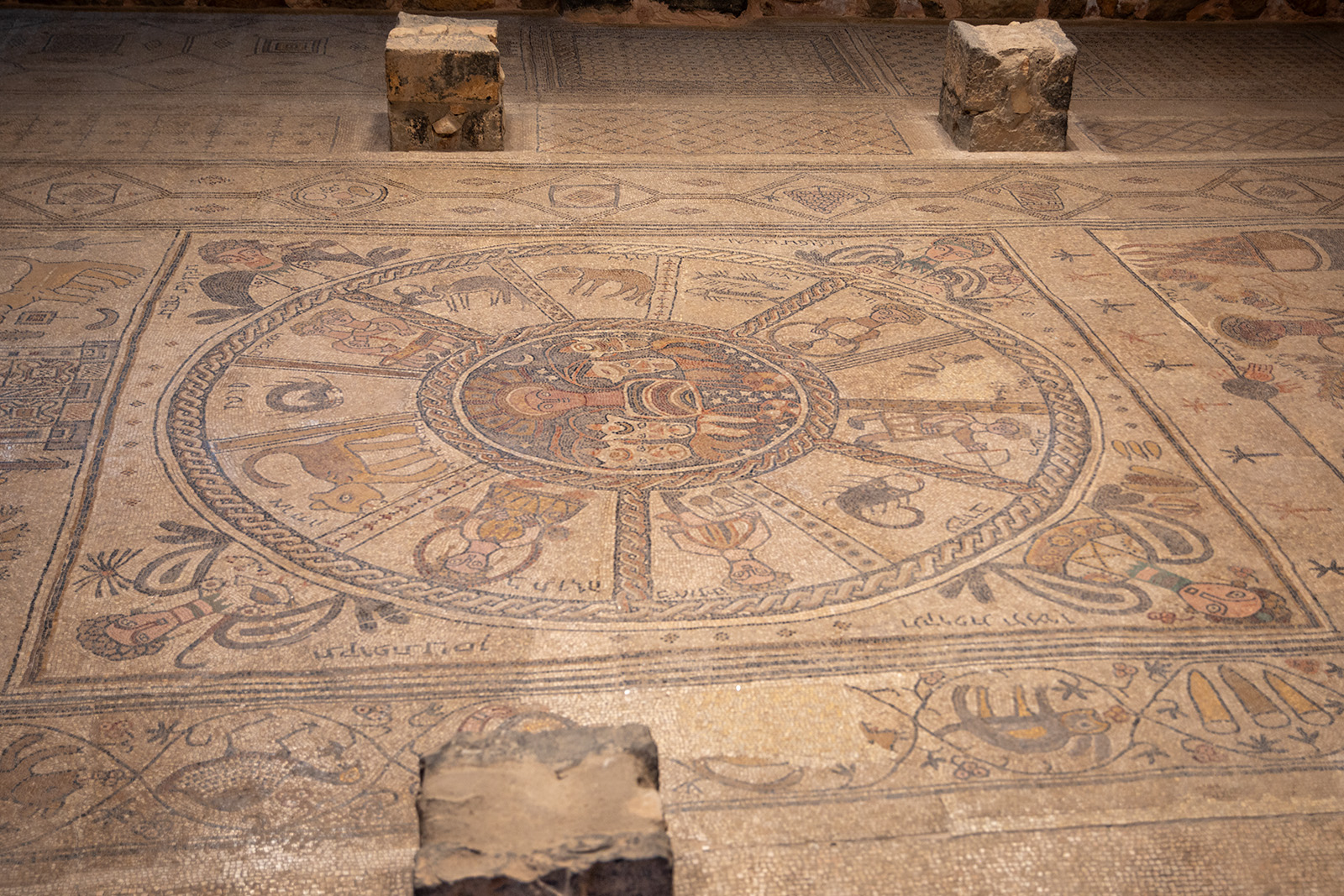
Panel 3—Zodiac Wheel. The third panel depicts a Jewish zodiac, accompanied by symbols representing the months along with their names in Hebrew and Aramaic. The center of the zodiac depicts the sun god Helios riding in a chariot drawn by four horses. Although derived from Greco-Roman artistic traditions, the figure appears to symbolize God’s governance of the heavens and the passage of time. The figures of women in the corners symbolize the four seasons of the year.
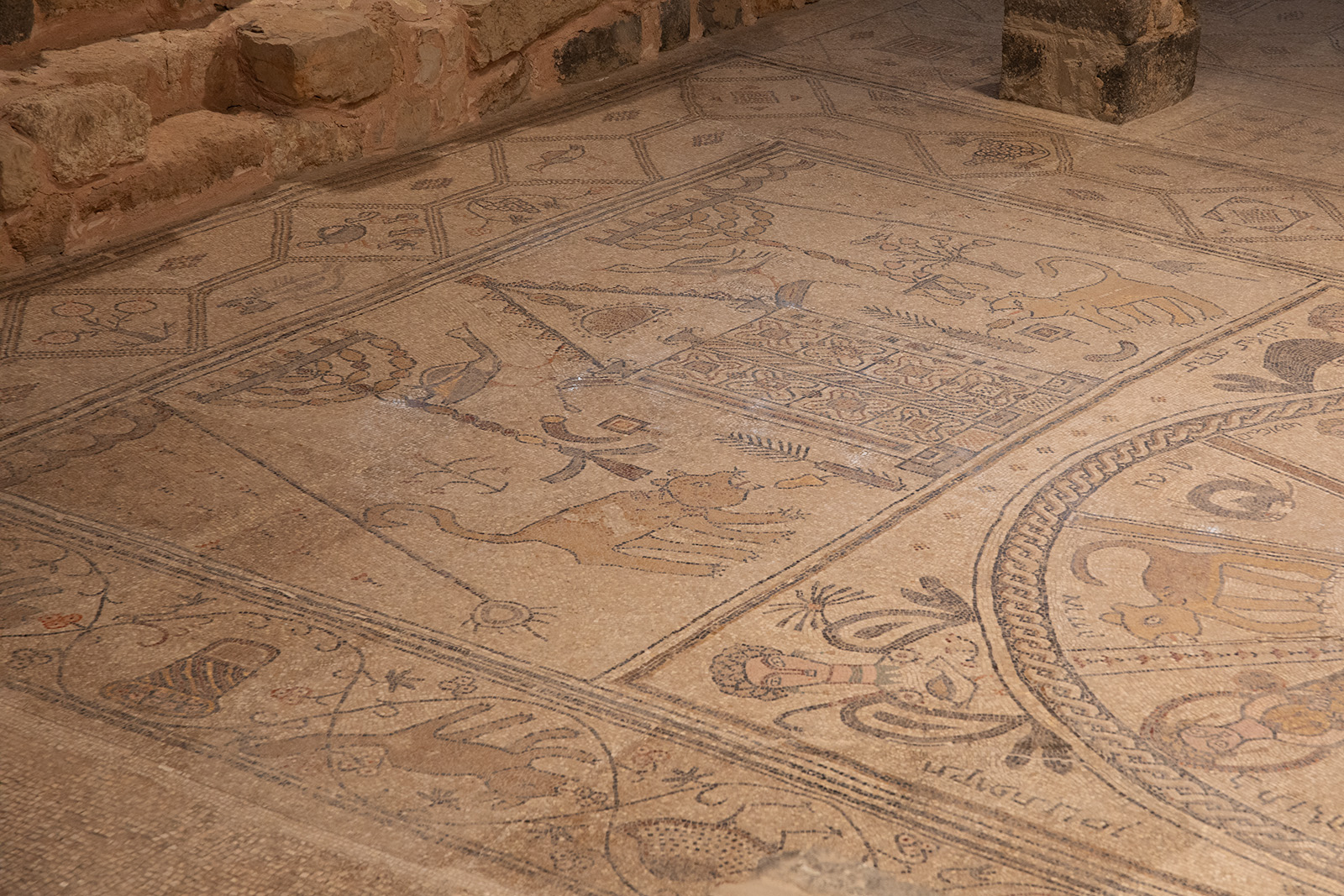
Panel 4—Ark of the Covenant. The fourth panel is before the apse of the synagogue, which faces Jerusalem. It depicts the Ark of the Covenant that was kept in Shiloh during the period of the Judges (Josh. 18:1). Above the Ark is a cornucopia. Around the Ark are two menorahs, birds, a pair of lions, and various vessels from the Temple in Jerusalem.